Events
Marketing at the Speed of Culture: Highlights from the Financial Services Marketing Leaders’ ThinkTank Toronto

(This article first appeared on LinkedIn here)
On 4 March 2026, the financial services marketing community came together at IBM’s Toronto headquarters for our inaugural event in Canada - the Financial Services Marketing Leaders’ ThinkTank Toronto - a fast‑moving, deeply practical look at how brand, content, and performance marketing are evolving in an AI‑accelerated world.
Supported by Conductor, CIM | The Chartered Institute of Marketing, RightMetric, Pandher Wishart Studios, and kindly hosted by IBM, the ThinkTank brought together leaders from banks, investment managers, fintechs, global research teams, and agency partners to examine what it now takes to build trust, earn attention, and drive growth in 2026.
What emerged was one of the most candid and energising conversations I’ve seen across the global community: a clear-eyed assessment of how quickly audience behaviour is shifting, how AI is changing the craft of marketing, and how organisations must adapt if they want to remain relevant.
Why adapting fast to cultural and technological change is essential
A clear theme emerged across the day in Toronto: the centre of gravity in financial services marketing has shifted. The brands that will grow in 2026 are not simply the ones with the best products or the biggest budgets, but the ones that can interpret culture quickly, respond with relevance, and build trust in a world where expectations are shaped by the best experiences consumers have anywhere, not just in financial services.
AI was present in every conversation, but not as a distant promise. It has already become the operating system of modern marketing - collapsing production timelines, reshaping workflows, and forcing teams to rethink how they create, distribute, and measure content. But the deeper shift is cultural. When the cost of content falls to near‑zero, differentiation comes from originality, editorial judgement, and the ability to show up with something meaningful at the moment a customer needs it.
Toronto made that reality unmistakable. Every speaker, from global banks to wealth management firms to tech leaders, returned to the same point: the brands that win will be the ones that move with technology and culture, not after it. That requires a different posture - more curious, more experimental, more editorial - and a recognition that while AI will transform the work, the human touch has never mattered more.
What follows are the some short session overviews that brought this thesis to life.
Opening Panel: Generative Search in Financial Services
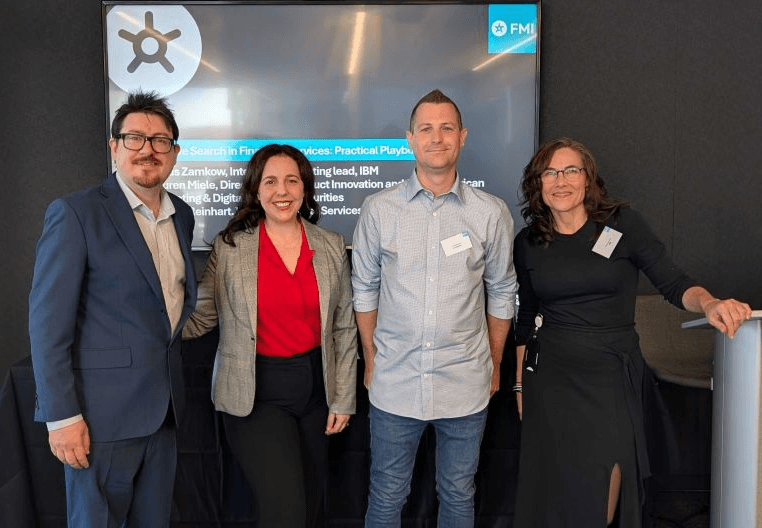
(pictured left to right: Jacob Howard, Lauren Miele, Patrick Reinhart and Alexis Zamkow)
The ThinkTank opened with a focused, highly practical discussion on how generative AI is affecting Search - and what that means for financial services. IBM’s Alexis Zamkow set the stage, with TD's Lauren Miele, MBA (she/her/hers) and Conductor's Patrick Reinhart unpacking the shift from traditional keyword‑based discovery to a world where search is conversational, predictive, and increasingly answers questions on behalf of the user. For FS marketers, the implication is clear: content must now be structured so that AI systems can interpret it, trust it, and surface it accurately. Ranking for keywords matters far less than becoming the most credible answer.
Key takeaways for FS marketers
Optimise for answers, not queries - Generative search rewards clarity, authority, and well‑structured content that AI can easily summarise and reuse.
Build content for machines and humans - Schema, clean architecture, and clear narrative flow now sit alongside traditional SEO as essential hygiene.
Treat search as an experience - As discovery becomes conversational, search, site, and content strategy must work as one system - not separate channels.
Session 2: How Customer Expectations Are Redefining Wealth Management
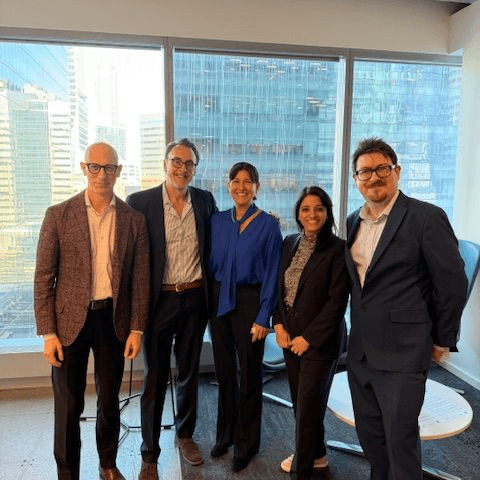
(pictured left to right: Chris Dotson, Tim Cuffe, Danielle Skipp, Meena Gupta and Jacob Howard)
This panel explored how quickly client expectations in wealth management are shifting - and how firms must adapt if they want to stay relevant. RBC Wealth Management's Chris Dotson, Scotia Wealth Management's Meena Gupta, and Sonance's Danielle Skipp, LL.B each highlighted the same underlying trend: clients now expect clarity, immediacy, and personalised guidance shaped by the best digital experiences they encounter anywhere. Trust is increasingly built through transparent communication and inclusive design, not institutional formality. As wealth becomes more diverse and intergenerational, firms must move from broadcasting expertise to anticipating needs and removing friction from every interaction.
Key takeaways for FS marketers
Clarity builds trust - Clients respond to plain‑spoken, human communication - not complexity.
Personalisation is expected - Advisory, content, and digital experiences must adapt to different life stages and levels of financial confidence.
Inclusive design drives growth - The next generation of wealth clients expects services that reflect their values and identities.
Session 3: Building Resilient Teams - Talent, Culture, and Inclusion
I moderated this fascinating session, which explored what it takes to build marketing teams that can adapt to rapid technological and organisational change. Brent Merriman described CIBC Mellon’s newsroom‑style model, where regular editorial calls open to the whole business bring diverse perspectives into the work and build trust through transparency.
Mackenzie Investments' Fate Saghir, CPA outlined how her team decides what to build in‑house versus outsource - based on differentiation, IP, and risk profile - and how external partners are helping them stand up AI capabilities quickly before internalising them. She also highlighted how junior staff now manage multiple AI agents, including a “BrandCop” agent for tone and consistency, and how task‑force owners are redesigning entire workflows with permission to break and rebuild them.
Key takeaways for FS marketers
Open editorial models strengthen alignment - Newsroom‑style structures bring more voices into the work and speed up decision‑making.
In‑house vs outsourced should be intentional - Differentiation, IP, and risk profile guide what to keep close and what to partner on.
Empowerment fuels better work - Giving people permission to try new things and redesign workflows creates safety, ownership, and better ideas.
Session 4: Brand Building and Trust in a Fragmented World
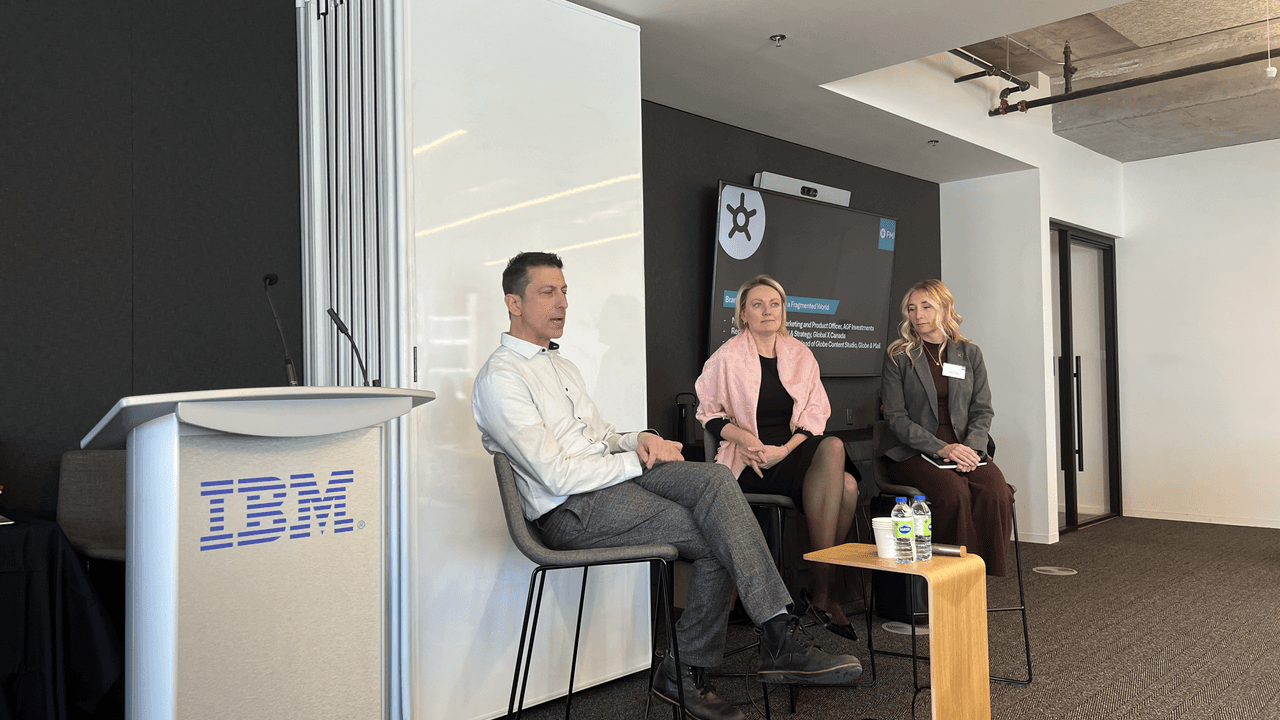
(pictured left to right: Sean Stanleigh, Meaghan Kelly and Renae Quinton)
This session examined how financial brands can build trust and drive product outcomes in an environment where audiences are fragmented and attention is increasingly hard to earn. AGF Investments' Meaghan Kelly and Global X Canada's Renae Quinton emphasised to Globe & Mail's Sean Stanleigh that brand is now the organising system that keeps multi‑channel activity coherent - ensuring every touchpoint reinforces the same promise. Clear storytelling, consistent value articulation, and disciplined top‑of‑funnel investment emerged as essential to helping customers understand products long before they reach a sales conversation.
Key takeaways for FS marketers
Brand drives product performance - Consistent, clear storytelling accelerates understanding and consideration.
Top‑of‑funnel matters more than ever - Trust and awareness must be built well before a buying moment.
Consistency wins in fragmented environments - A unified brand system ensures every interaction reinforces credibility.
Session 5: Signal in the Age of AI
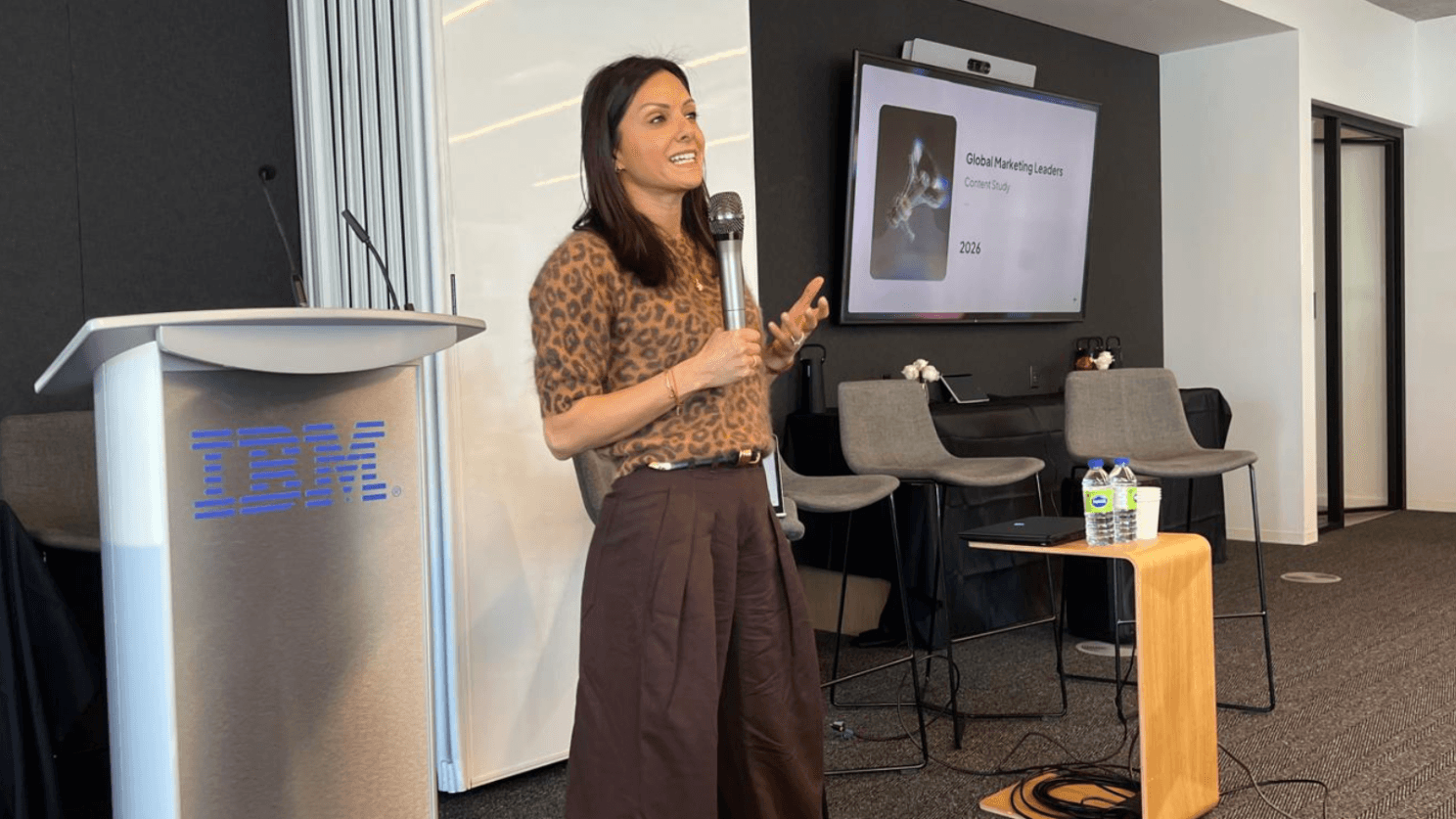
Pandher Wishart Studios' Satwant Wishart shared the latest findings from the Global Marketing Leaders Content Study, focusing on how AI is reshaping content strategy and creative decision‑making. Her central point was the rise of synthetic audiences - AI‑generated audience models that allow marketers to test messaging, creative, and positioning before going to market. These models help teams understand likely reactions, refine ideas earlier, and reduce the cost of iteration.
Sat also emphasised that as AI accelerates production, the real differentiator becomes editorial discipline: sharper positioning, clearer points of view, and teams organised around insight rather than volume.
Key takeaways for FS marketers
Talent models are shifting - As AI scales production, marketers must rebalance teams toward insight, judgement, and creative direction.
Synthetic audiences unlock faster, smarter testing - enabling teams to refine content before it reaches real customers.
Differentiation depends on point of view - clarity and conviction matter more than volume.
Session 6: Inside Chime’s Growth Engine
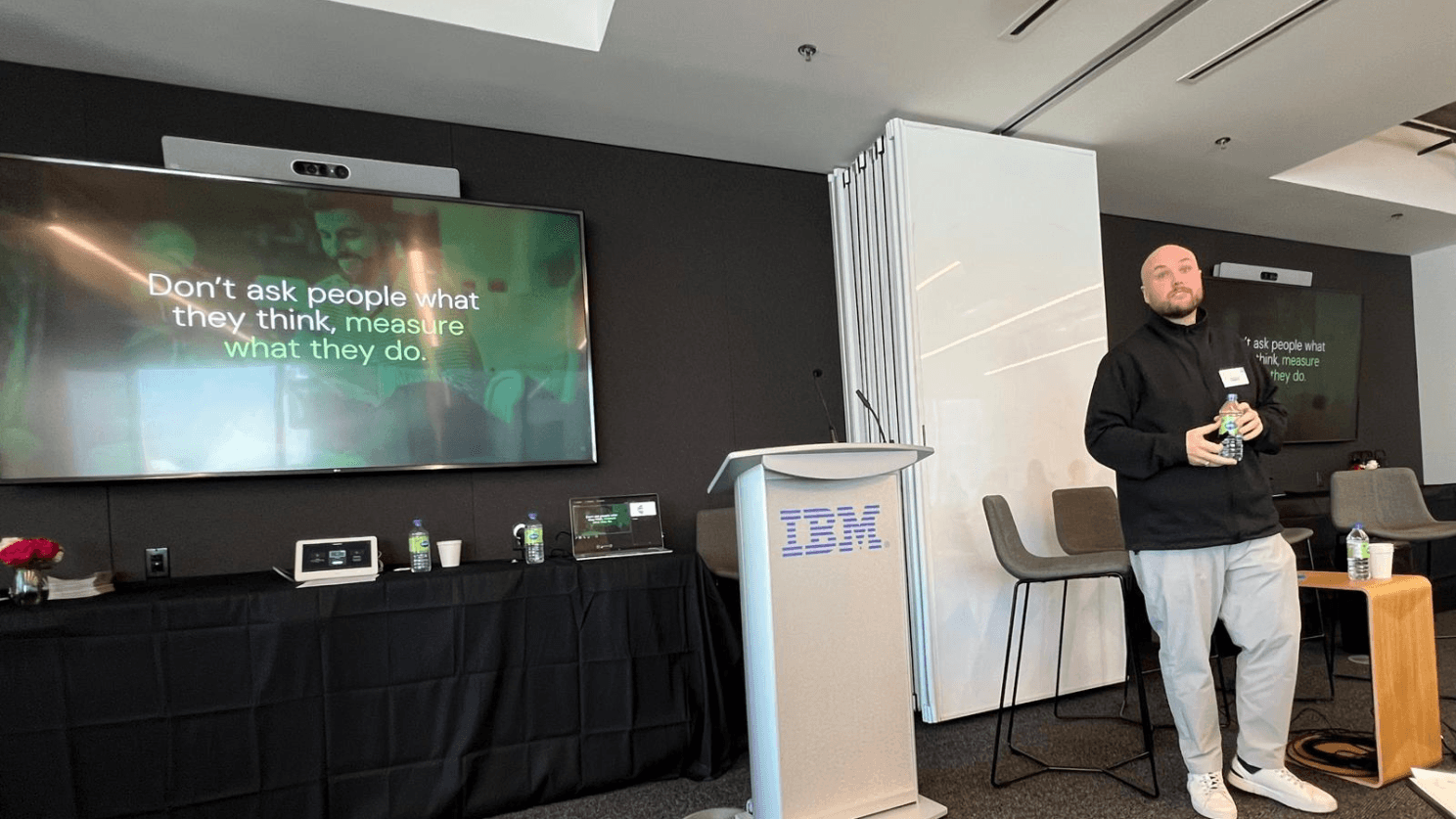
RightMetric's Charlie Grinnell explained story of the growth of Chime - the U.S. neobank that has scaled to more than 9 million active members and now sits in the public markets. He framed Chime’s rise as a blueprint for modern financial services growth: solve real pain points for underserved consumers, package them in simple, high‑visibility features like “get paid early,” and amplify them through a culturally fluent social strategy.
Charlie also showed how RightMetric’s methodology provides competitive ‘Outsight’ - using structured analysis of high‑growth brands to reveal the underlying patterns behind their success. By breaking down Chime’s product, positioning, and social execution, he demonstrated how teams can use this kind of external intelligence to sharpen their own strategies and spot opportunities earlier.
Key takeaways for FS marketers
Solve real problems, then communicate simply - Chime’s growth is rooted in tangible, easy‑to‑understand benefits.
Social drives trust at scale - Creator‑led, culturally relevant content fuels awareness and credibility.
Speed is defensive - Incumbents must modernise product marketing approaches to suit the next generation before new waves of challengers arrives.
Closing Key Note - Creativity, AI, and the Human Touch, with Dominique Rose Van-Winther - Final Upgrade AI

Dominique closed out the summit with an energetic look at how AI is transforming creative work, production speed, and the economics of marketing. She spoke about what she calls “The Fear Flip” - the shift from fearing AI to fearing missing out on what it enables. Her examples showed how AI can collapse timelines dramatically: global research programmes that once took months can now be built, analysed, and launched in as little as six weeks, complete with interactive data explorers and market‑specific personalisation.
She emphasised that the real impact isn’t automation for its own sake, but the ability to personalise at scale, reduce production costs without compromising experience, and bring more strategic work back in‑house. As AI handles more executional tasks, teams can focus on insight, narrative, and higher‑order creative decisions - the human elements that still differentiate brands.
Key takeaways for FS marketers
AI collapses production cycles - complex research, content, and digital assets can now be built and personalised in weeks, not months.
Personalisation becomes the default - AI makes it possible to tailor materials for specific markets without adding cost or complexity.
Strategy is moving back in‑house - as execution becomes more automated, teams are reclaiming upstream thinking and creative direction.
Conclusion
Across every panel and keynote, one message was unmistakable: AI may be transforming the mechanics of marketing, but the fundamentals of trust, clarity, and coherence matter more than ever. The brands that will win in 2026 are the ones treating marketing not as a collection of channels, but as a connected system - built to perform for both human and machine audiences, and measured across the full funnel.
Toronto made it clear that staying ahead now requires sharper positioning, stronger operating models, and a willingness to experiment before the market forces you to. To turn the day’s insights into action, here are the top priorities for FS marketers:
Codify your brand system - Define a clear narrative, tone, and identity - then embed it across every asset, region, and product line to reduce friction and accelerate understanding.
Turn content and events into revenue stories - Capture qualitative and quantitative signals, align with business leaders, and report both sourced and influenced impact.
Design for attention - Use short‑form video, visual‑first formats, and Q&A content that answers real buyer questions; repurpose every asset with intention.
Optimise for machines and humans - Audit how LLMs interpret your brand, expand machine‑readable content, and structure sites for generative search.
Build advocacy beyond testimonials - Create programs that drive referrals, share of wallet, and co‑created insight - measured over multi‑quarter cycles.
Operationalise AI - Pilot workflows for content creation, testing, and personalisation; explore synthetic audiences to refine messaging.
Empower spokespeople with guardrails - Support authentic personal brands within regulatory boundaries and centralise distribution through advocacy tools.
A highly engaged audience and a day of sharp, generous insight made this inaugural event in Canada a real success. Thank you again to everyone who supported, contributed, and attended – and a special mention to the IBM team, especially Miglena Nikolova, CM, MBA and the two University of Toronto students who helped out so much – Laura Arteaga and Rita Acisobi.
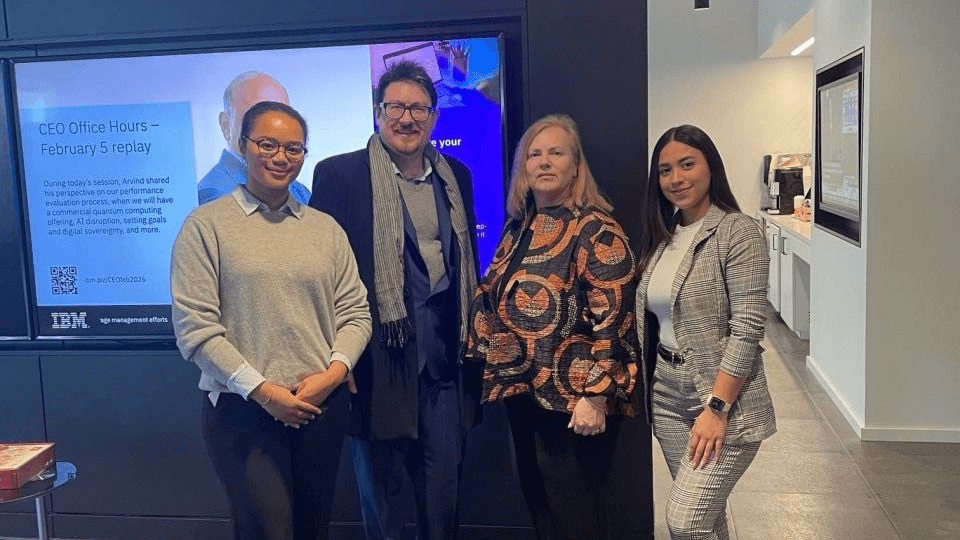
(pictured left to right: Rita Acisobi, Jacob Howard, Miglena Nikolova and Laura Arteaga)
See you next time!