Events
Building Your Growth Engine: Lessons from the Americas Financial Services Marketing Leaders’ Summit
(This article first appeared on LinkedIn here)
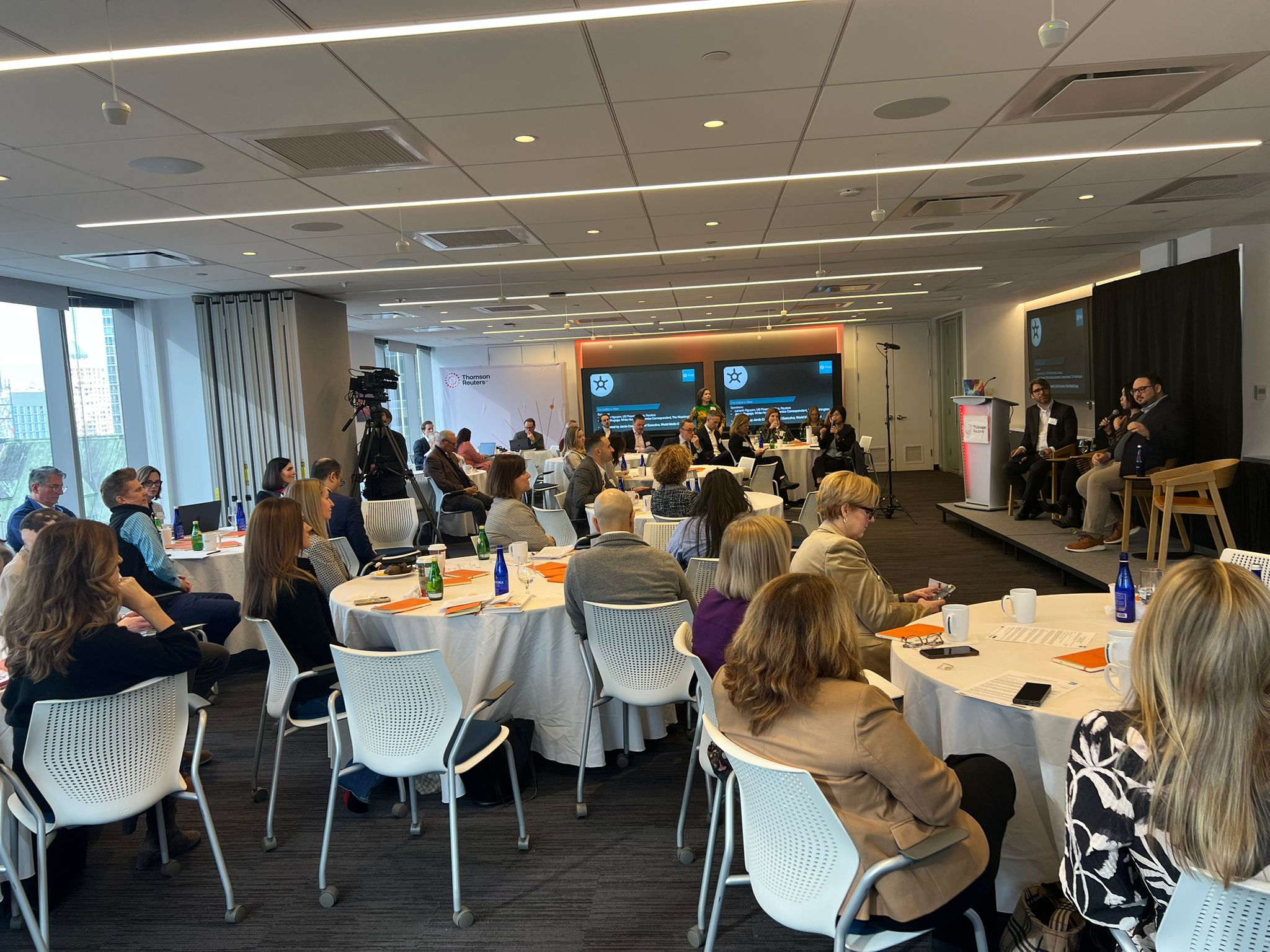
On 10 December 2025, we brought together the financial services marketing community for the Americas Financial Services Marketing Leaders’ Summit at Reuters in Times Square and a fast-moving, deeply practical look at how brand, content, and performance marketing are evolving.
Supported by Dianomi, CIM | The Chartered Institute of Marketing, World Media Group, Resonate Global Advisors LLP, Casey Wishart & Partners and of course our hosts Reuters, the Summit assembled leaders from banks, asset managers, fintechs, editors from leading newsrooms, and agency partners to debate what it takes to drive growth in 2026. Here I’ll summarise the sessions and key takeaways for FS marketers.
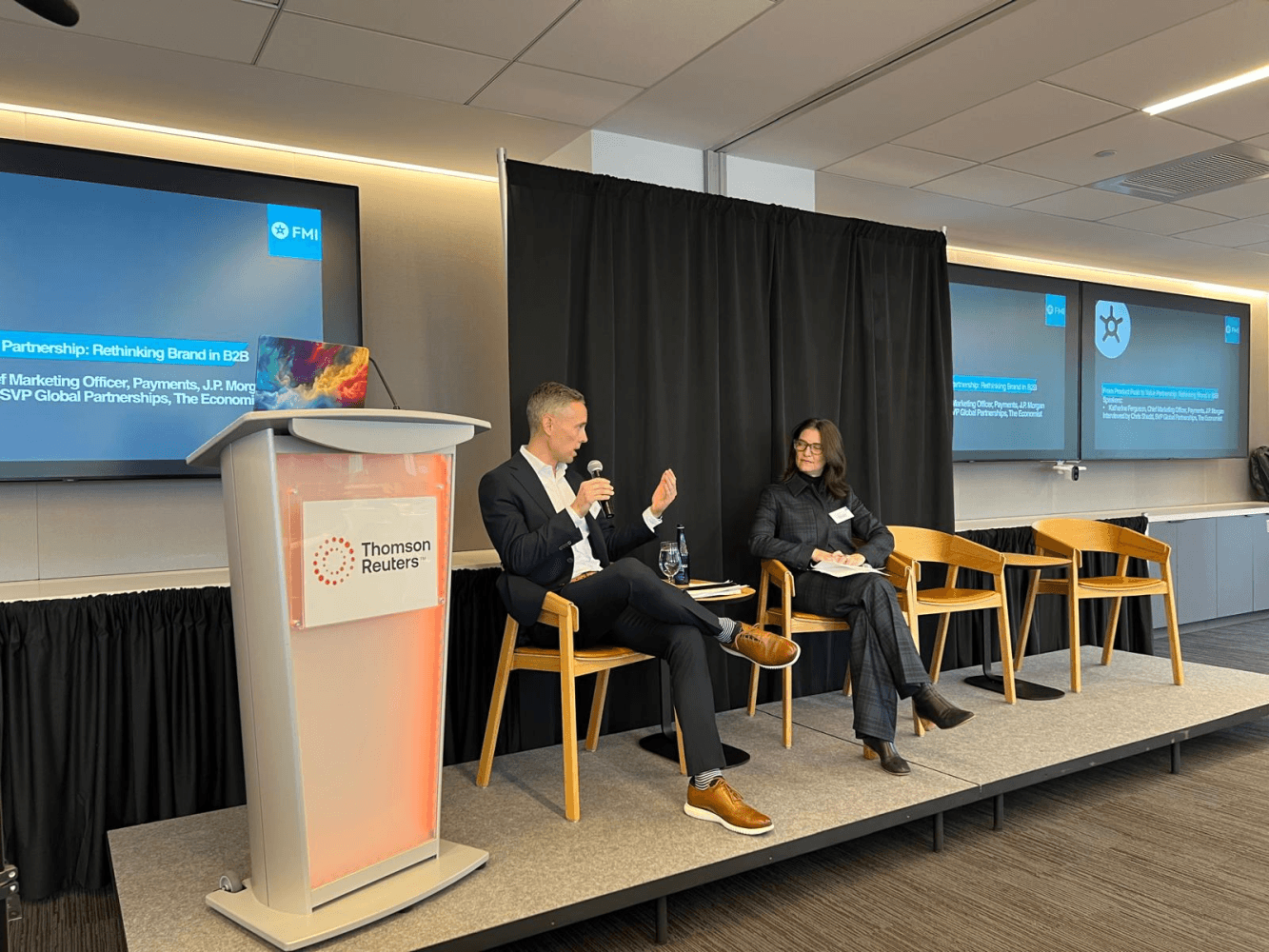
Opening Fireside Key Note: Value Partnerships Over Product Menus
Katherine F. (CMO, Payments, J.P. Morgan) and Chris Shedd (SVP Global Partnerships, The Economist) set the tone with a sharp reframing: in B2B financial services, clients aren’t buying products - they’re buying clarity, outcomes, and reputation. Ferguson described a deliberate shift from “menu marketing” to an integrated brand system built on a single, unified go-to-market approach, unified narrative, and consistent design and tone - reducing friction for sales and helping buyers navigate complex, commoditized categories. She also cautioned against overused language (“disruptive,” “end-to-end,” “AI-powered”), urging marketers to tell authentic stories grounded in real product capabilities.
Key takeaways for FS marketers
Treat brand as a system, not a campaign: A coherent operating model (narrative, design, tone, sales enablement) makes every interaction reinforce the same promise - and shortens sales cycles.
Measure on two horizons: In-year metrics (trust, earlier RFP inclusion, consideration, internal alignment) signal future demand; longer-cycle measures (revenue, share of wallet, retention, multi-product adoption) validate growth.
Global narrative, local nuance: Give regions a core identity system - and freedom to localize for regulation, customer needs, and culture without breaking the brand.
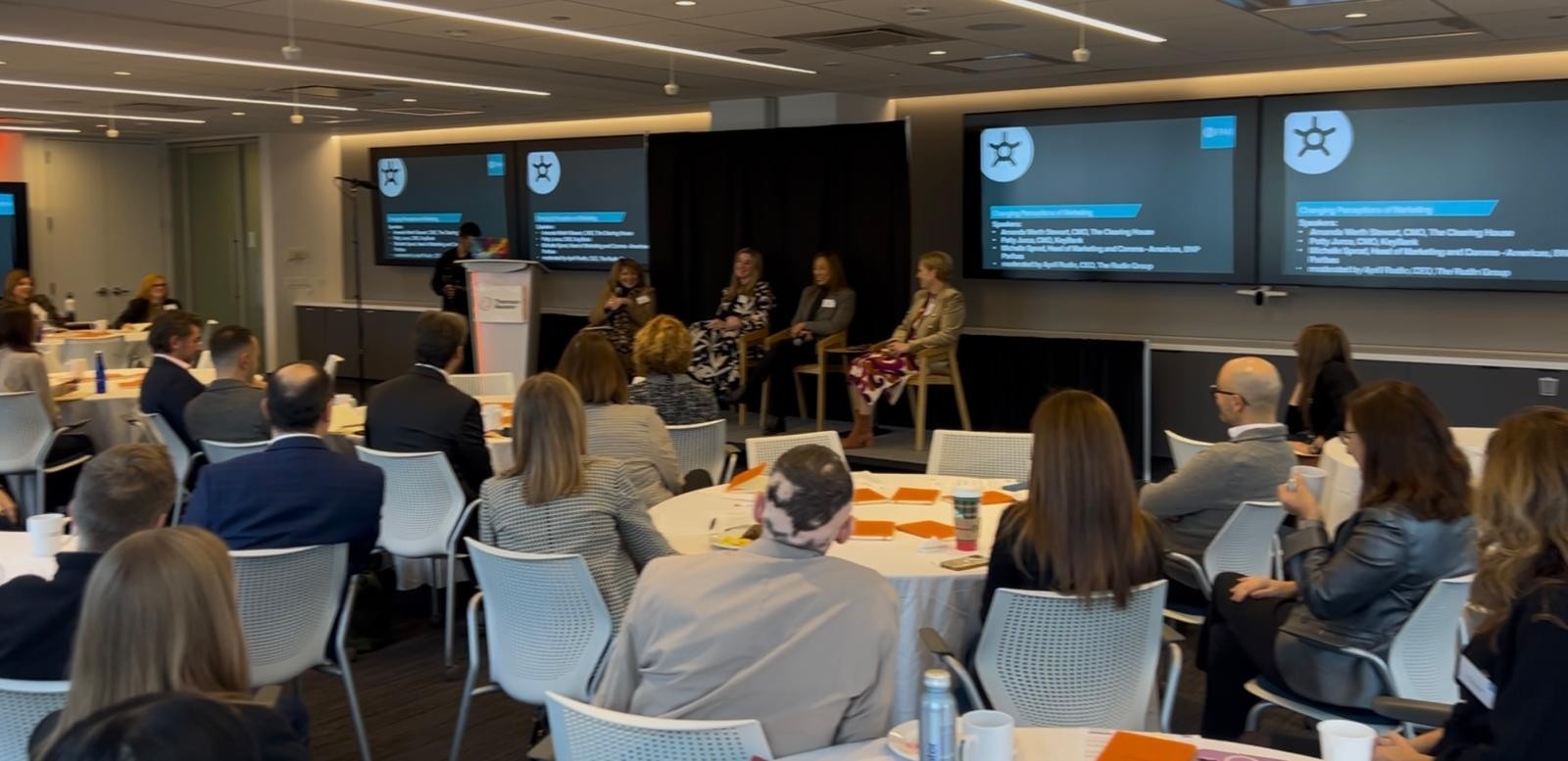
Changing Perceptions of Marketing: ROI, Roles, and Personal vs. Corporate Brands
April Rudin (CEO, The Rudin Group) moderated a candid panel with Amanda Werth Stewart (CMO, The Clearing House), Patty Jurca (CMO, KeyBank), and Michelle Sprod (Head of Marketing & Comms Americas, BNP Paribas). The conversation focused on moving beyond “marketing as cost” by instrumenting programs with data-driven proof - and on clarifying handoffs between marketing, sales, and sales enablement.
Key takeaways for FS marketers
Conference-to-revenue tracking: Teams are sometimes manually tying events to mandates, pipeline, and direct revenue by collecting qualitative + quantitative follow-ups from each salesperson/trader, then aligning totals with business heads. It’s intense - but gives marketing a credible seat at the revenue table.
Personal brands with guardrails: Enable employees (especially spokespeople) with training, frameworks, and native social content - but be crystal-clear that pitch books are not a canvas for personal creativity; the conversation is where individuality and trust should really shine.
Regulatory realities on LinkedIn: In some contexts such as investment banking, off-channel communication capture constraints mean limited posting. Teams are using advocacy tools, templated content, and training frameworks to stay on-message while ensuring compliance at every step.
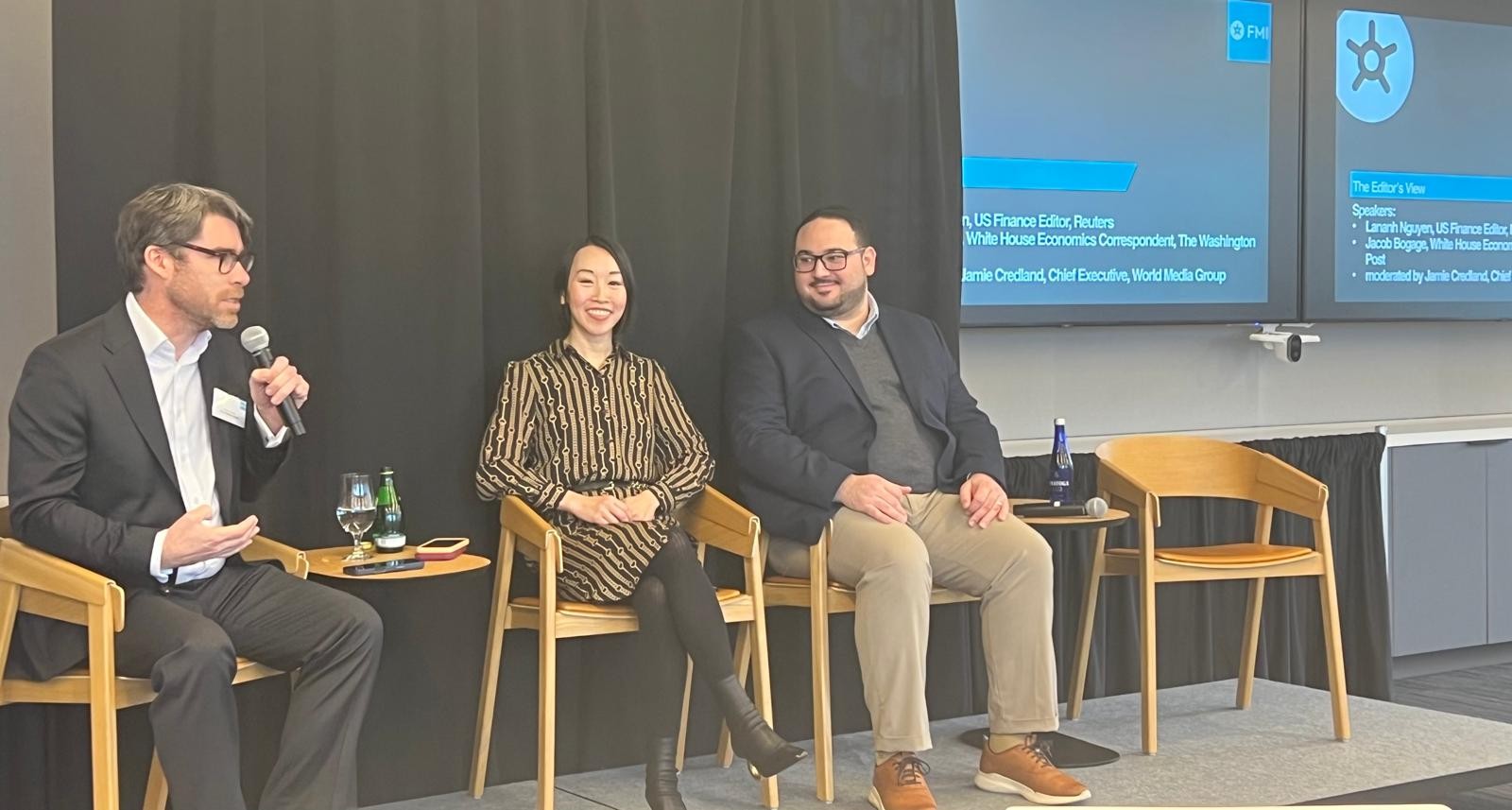
Editors’ View: Navigating Political Volatility and the Attention Economy
Lananh Nguyen (US Finance Editor, Reuters) and Jacob Bogage (White House Economics Correspondent, The Washington Post) spoke with WMG's Jamie Credland offering a frank look at business, policy, and how newsrooms are evolving format-first to deliver “news you can use.” Bogage shared how simple, audience-driven explainers performed across TikTok and Instagram - evidence that clarity beats complexity.
Key takeaways for FS marketers
Don’t chase every announcement; design for durability: Businesses - and journalists - have learned to filter noise, focusing on what actually changes customer behavior and operations. Your evergreen content and explainers should do the same.
Format matters: Visual-first, concise Q&A content, and short video explainer formats cut through crowded feeds - especially when built around the real questions customers ask.
Affordability remains a felt truth: Even when macro indicators look stable, consumer sentiment skews cautious. Brand narratives should respect that cognitive dissonance - show value, not victory laps.
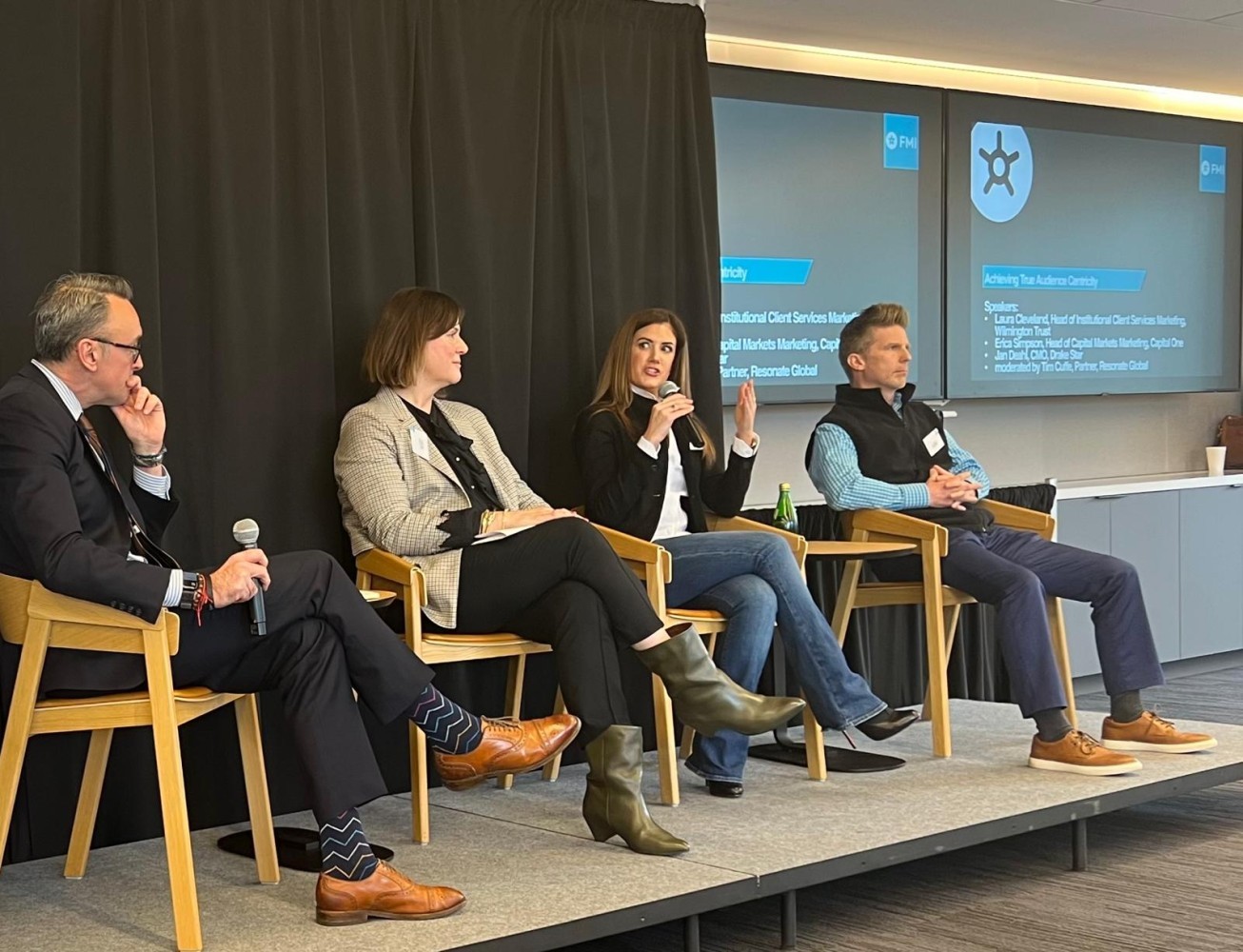
Achieving True Audience Centricity: ABM, Personalization, and Advocacy
In a practical panel led by Timothy Cuffe (Resonate Global) with Laura Cleveland (Wilmington Trust), Erica Simpson (Capital One), and Jan Deahl (Drake Star), speakers separated hype from reality on ABM and personalization-at-scale.
Key takeaways for FS marketers
Start small, prove value, then scale: Pilot ABM with a single product line; use response data to refine audiences and creative; expand once you’ve shown signal (e.g., law firms engaging, referral sources activating).
Personalization requires plumbing: Without clean segmentation, consented data, and consistent messaging, “AI will fix everything” becomes a mirage. Test & learn is non-negotiable.
Advocacy > testimonials: For complex B2B sales, repeat business, cross-sell, referrals, and client participation in advisory boards are stronger indicators than a glossy quote. Build programs that nurture share of wallet and co-create insight with clients.
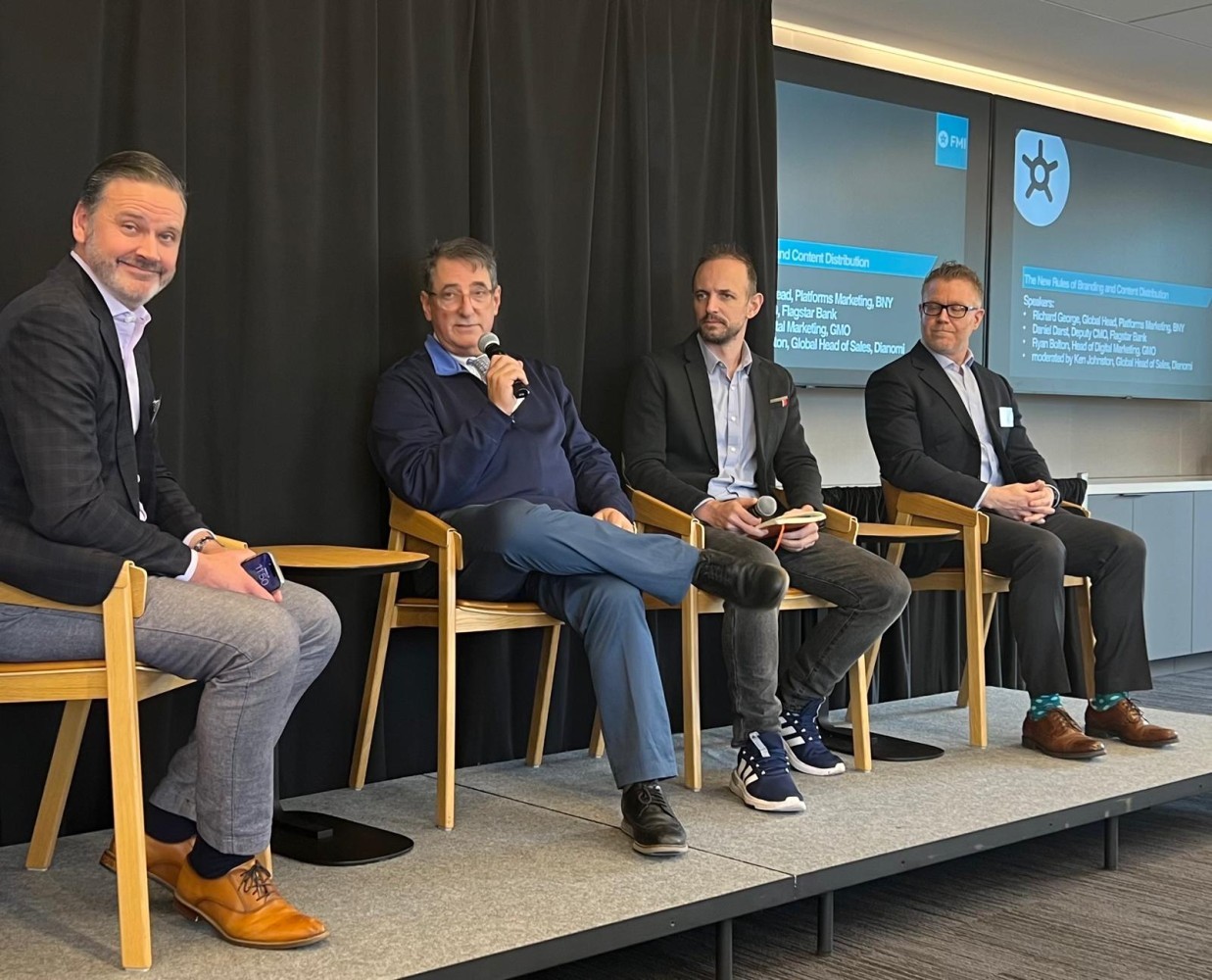
The New Rules of Branding & Distribution: Multiplying Formats, Unifying Systems
Ken Johnston (Dianomi) hosted Richard George (BNY), Daniel Darst (Flagstar Bank), and Ryan Bolton (GMO) for a look at content formats and funnels. The through-line: quantity is exploding; attention is collapsing - so brands need design systems and narrative architectures that keep every asset on-message, from pitch books to VR demos.
Key takeaways for FS marketers
Design systems as connective tissue: BNY is tying corporate positioning, product narratives, and AI-generated pattern assets into a single, recognizable system that travels across campaigns and sales materials.
Nine lives per asset: Distill a core piece of thought leadership into quotes, short videos, audiograms, and social snippets - meeting audiences wherever they scroll, with consistent headlines and hooks.
Measure for correlation, not ego: Triangulate sourced revenue, influenced/engaged revenue, and brand health; celebrate joint stories with sales rather than hunting for perfect attribution that rarely shows up in the data.
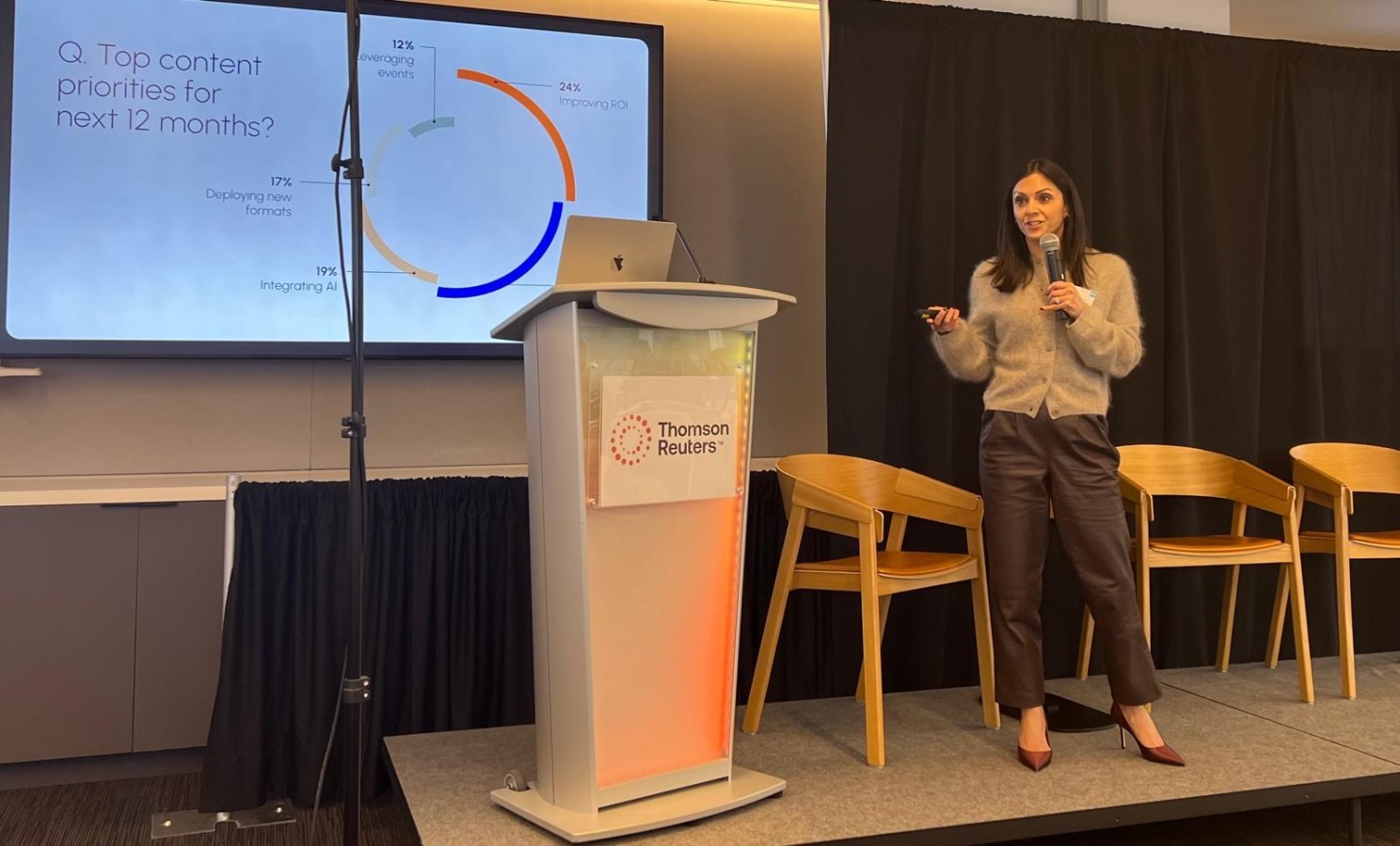
Marketing with the Machines: Synthetic Audiences and GEO (Generative Engine Optimization)
Satwant Wishart (Casey Wishart & Partners) shared research and practical demos on treating AI as an audience - not just a tool. By building synthetic audiences (AI-generated personas) and interrogating agentic search interfaces, teams can test messaging before launch and audit how machines describe their brand.
Key takeaways for FS marketers
Run an AI audit: Ask leading LLMs to describe your brand, compare you with competitors, and answer customer FAQs; note gaps and rewrite site content in Q&A / conversational formats with strong citations and neutral tone.
Design for GEO, not just SEO: Structure websites to be machine- and human-compliant, expand modular content (yes, sometimes more pages), and prioritise factual signals (stats, quotes, references) that LLMs trust.
Test before you invest: Use synthetic audiences to pressure-test campaign videos and messaging - recognising limits (they’re data-driven, low on emotion), but valuable for speed, cost, and early signal.
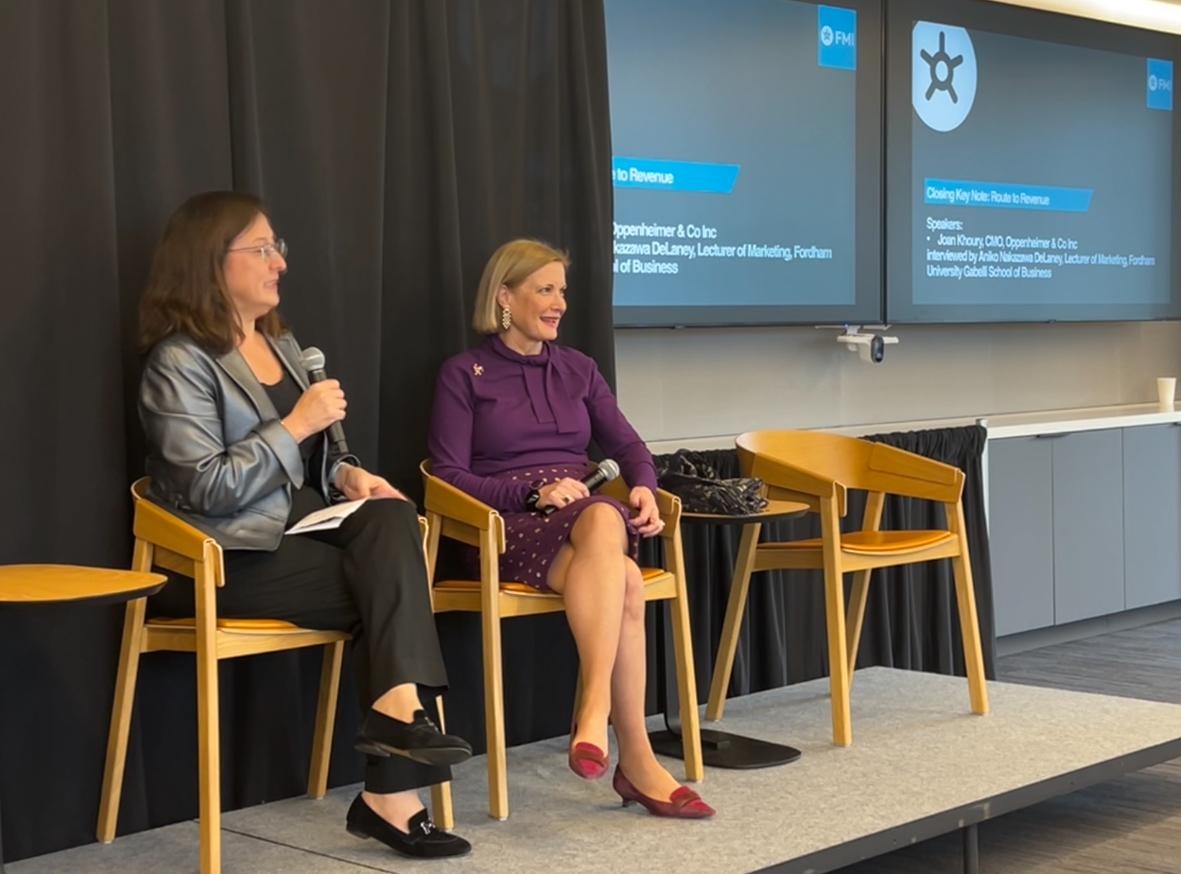
Closing Key Note: Route to Revenue
Joan Khoury (CMO, Oppenheimer Inc), interviewed by Aniko Nakazawa DeLaney (Fordham University Gabelli School of Business), reminded us that marketing leadership isn’t just about campaigns - it’s about building an asset that sits on the balance sheet. Her message was clear: educate leadership in their language (Your media portfolio), embed brand inside-out, and create a daily rhythm that keeps marketing connected to the business.
Joan shared how her team starts every day asking: What’s happening? Why does it matter? How do we tell that story by 10 a.m.? That discipline ensures marketing is never an afterthought - it’s a growth driver. She closed with a challenge: “If you want marketing to matter, you have to make it impossible to ignore.”
Key takeaways for FS marketers
Make brand a business lever, not a logo: Tie programs to firm value and measure employee clarity on strategy.
Humanize expertise: Researchers/analysts should produce short, two-minute video explainers that answer the most important question: Why should clients care?
Stay curious and uncomfortable. Seek out rooms that challenge you, listen at client events and on trading floors, and unplug long enough to think deeply.
Conclusion
Across panels and keynotes, one theme came through clearly: brand is no longer a campaign; it’s the operating system for growth. When codified and measured across the funnel - and when built to perform in both human and machine audiences - it reduces risk, speeds sales, and earns trust in a noisy, regulated environment.
As we head into 2026, the winning playbook blends clarity, consistency, and curiosity - plus just enough uncomfortable learning to stay ahead. To turn those principles into action, here are the top 7 ideas to focus on:
Create your brand operating system: Define a clear narrative, tone, and visual identity, then embed it into every asset. A strong system removes friction, accelerates conversations, and turns fragmented product messages into one cohesive story for the business.
Build revenue stories from events and content: collect qualitative + quantitative follow-ups, align with business heads, and report sourced + influenced revenue.
Reformat for attention: short video explainers, visual-first posts, and Q&A pages that answer real buyer questions; give every asset nine lives.
Design for GEO: audit how LLMs see you, expand machine-readable content with citations, and structure sites for AI and humans.
Move beyond testimonials: build advocacy programs that grow share of wallet, referrals, and co-created insight - measured over multi-quarter cycles.
Operationalise AI: pilot synthetic audiences to test messaging; invest in governed AI workflows for content creation, testing and personalization.
Train spokespeople and set guardrails: empower authentic personal brands within regulatory constraints; centralize content through advocacy tools.
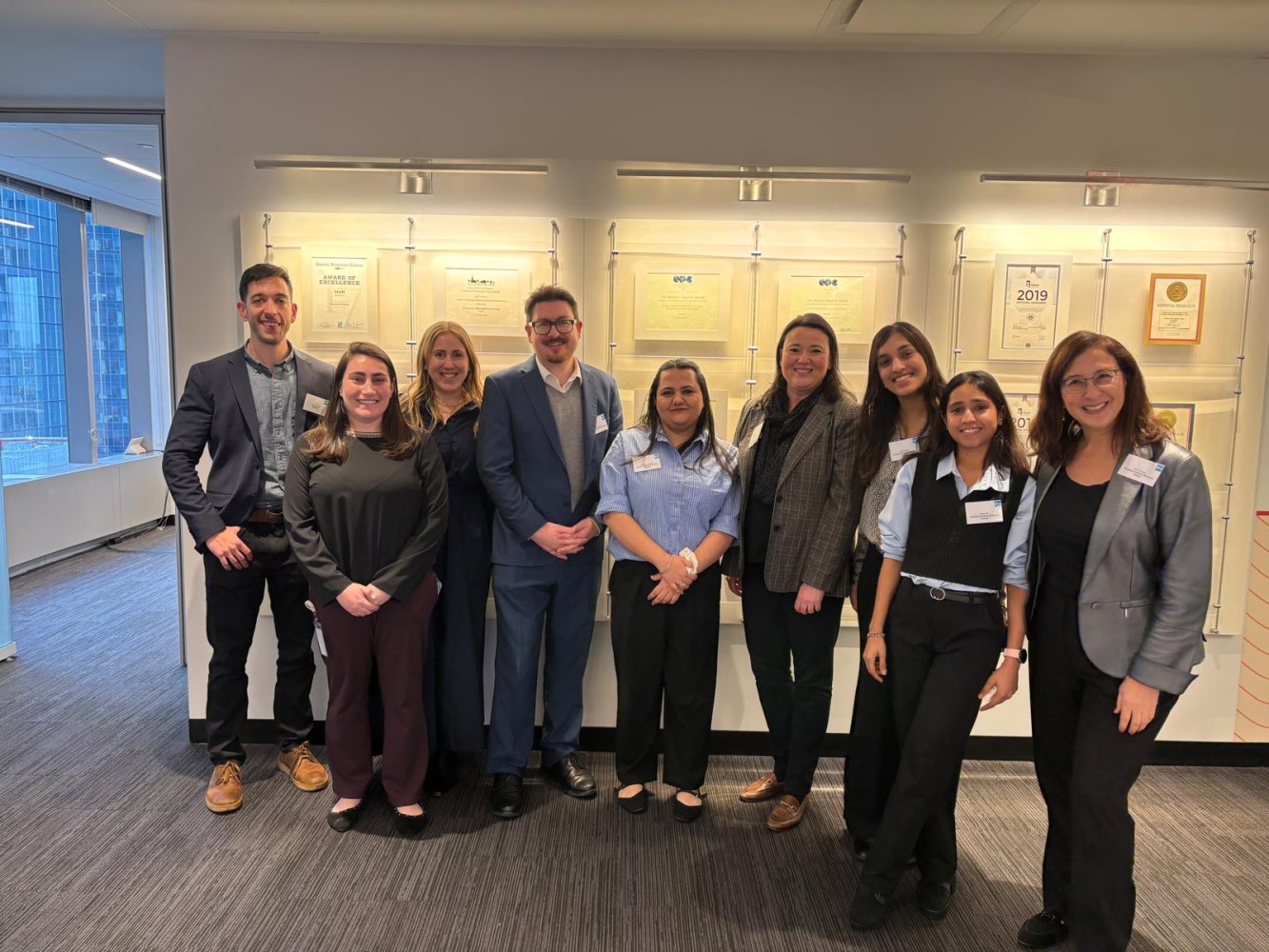
So much to learn, and a really engaged audience made this second Americas Summit a real success, thanks once again to all who supported and attended - and a special thank you to Ashley O'Brien, the team at Reuters and the Fordham University Gabelli School of Business students that helped everything run so smoothly (pictured below):
Stay tuned for more and see you out there!
Jacob