Events
Highlights of the APAC Financial Services Marketing Leaders' Summit 2026
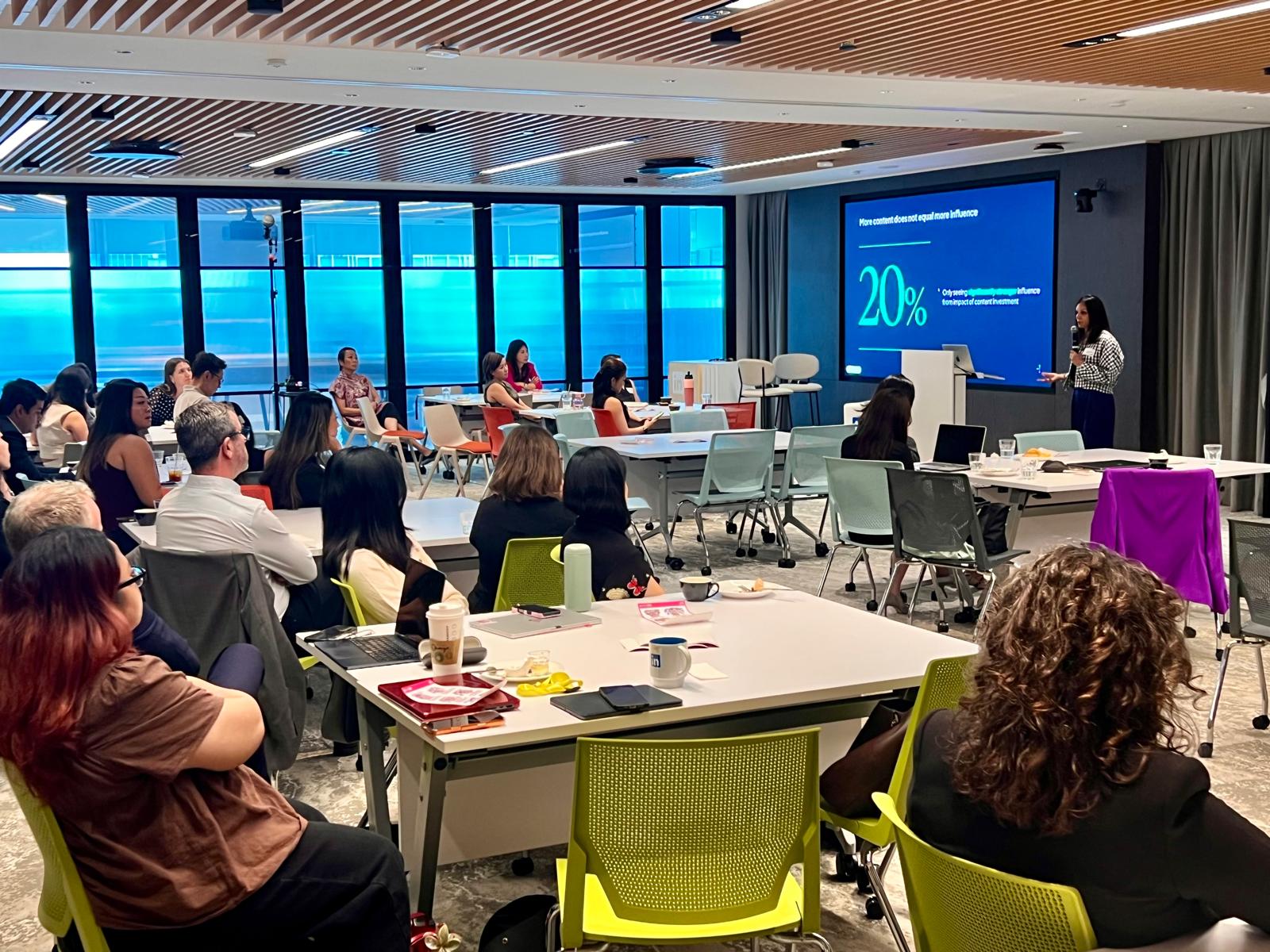
On 17th September 2026, Singapore played host to this year’s Financial Marketing Insights APAC Financial Services Marketing Leaders’ Summit at LinkedIn’s APAC HQ, a day that felt less like a conference and more like a reunion - a gathering of financial services marketers who understand the weight of regulation, the complexity of legacy systems, and the quiet power of community. From the moment the doors opened, the room buzzed with recognition: familiar faces from last year, new faces stepping into the fold, and a shared sense that this industry is changing fast.
What unfolded across the day was a tapestry of perspectives: AI evangelists, institutional marketers, journalists, academics, technologists, brand leaders, and purpose‑driven executives. Each session added a new layer to the story of where financial services marketing is heading - and what it will take to shape that journey.
Below is the full narrative of the day, with key takeaways for each session.
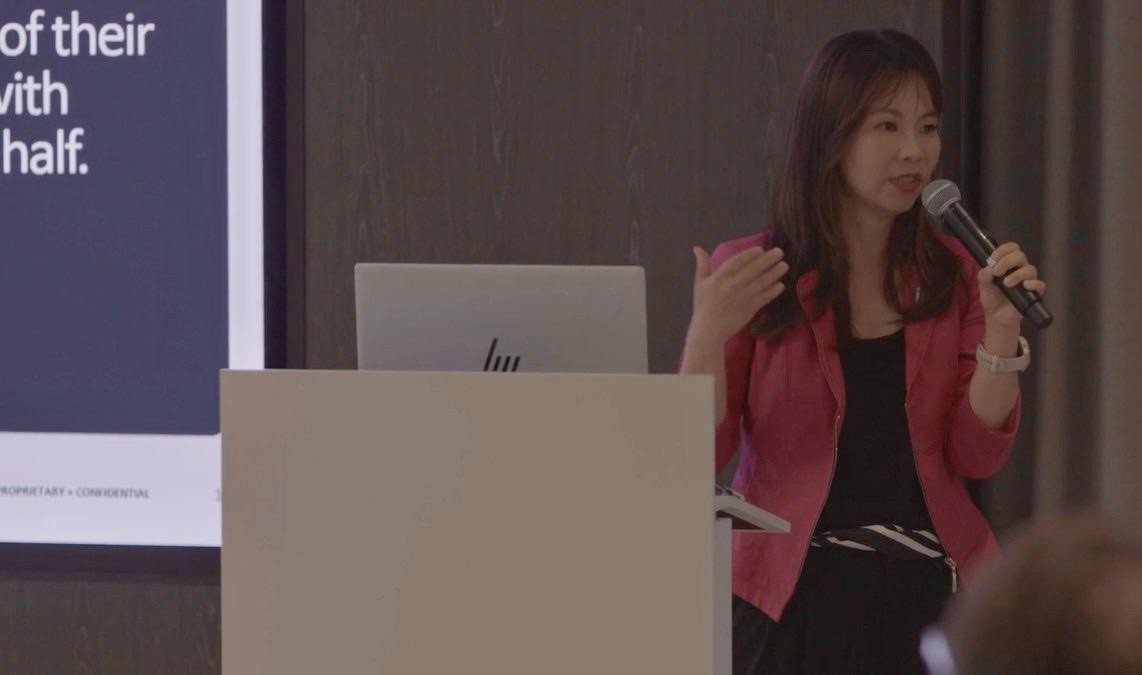
Pictured: LinkedIn's Su-Ren Neo
The Network That Works for You
Su-Ren Neo, Group Head of Marketing APAC at LinkedIn stepped onto the stage with the calm authority of someone who sees the entire APAC marketing ecosystem. LinkedIn’s purpose, she reminded us, is simple: create economic opportunity for every member of the global workforce.
But the real insight came from fresh research across 380 financial advisors in APAC. The room leaned in as Su‑Ren revealed that social media is now the #1 source of new clients in APAC, ahead of events and referrals. Digital is no longer a channel - it’s the first handshake.
Yet trust still comes from two deeply human factors: personalised communication and professional reputation. Digital expands relationships; it doesn’t replace them.
Key Takeaways
First contact is digital; trust is human.
Marketers must build strong brands and strong people.
Digital presence is now part of relationship management.
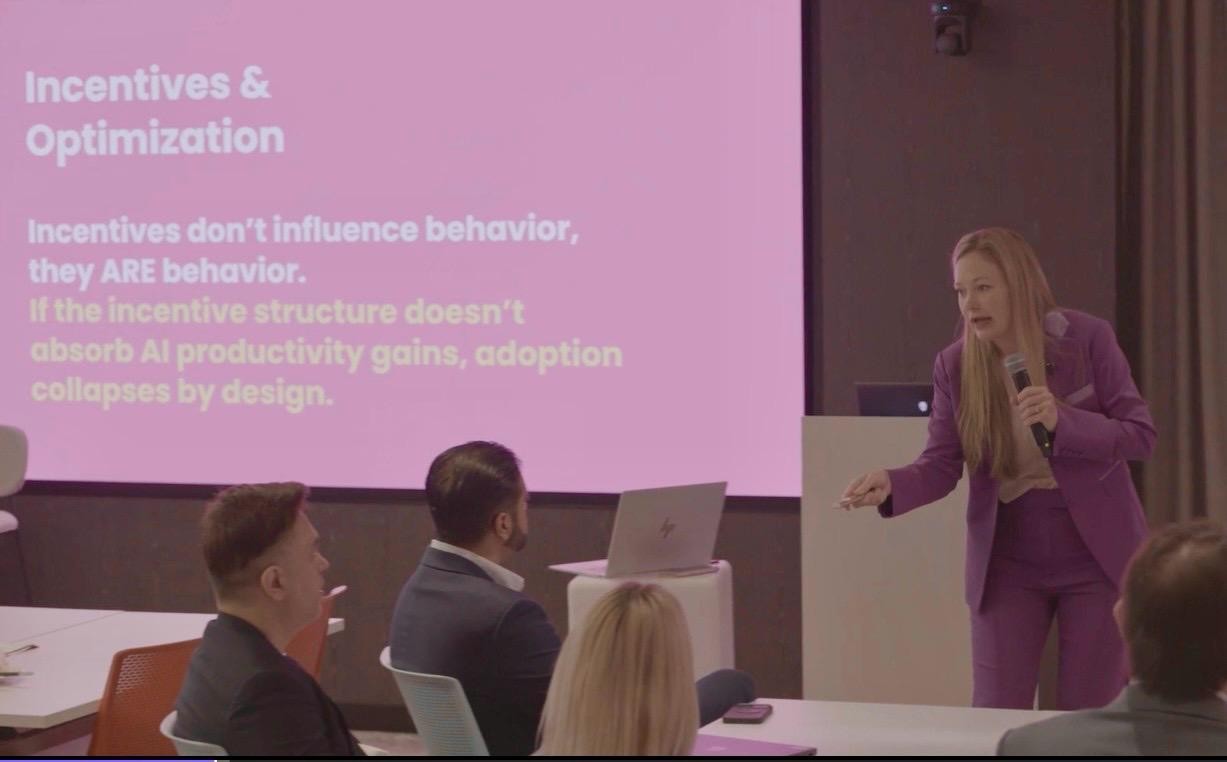
Pictured: Final Upgrade AI's Dominique Rose Van-Winther
AI Transformation - From Tools to 10‑X Humans
Dominique Rose Van-Winther, CEO, Final Upgrade AI delivered a keynote that felt like a jolt of electricity. She didn’t talk about AI tools - she talked about behaviour change. Most marketers, she said, use AI for only 17% of their work. With training, that rises to 55%. But true transformation happens when teams build AI agents and redesign workflows entirely - saving 18–25 hours per week.
Her message was provocative: AI transformation has nothing to do with tech. It has everything to do with people.
She showed how global organisations like IBM, Duolingo and Standard Chartered are already centralising workflows, accelerating localisation, and scaling content with AI. But the real unlock is purposeful time: if you don’t decide how to use the hours AI saves, nothing changes.
Key Takeaways
AI transformation is behavioural, not technical.
Every marketer should know how to build AI agents.
Transformation requires a clear North Star.
Purposeful time allocation is the real unlock.
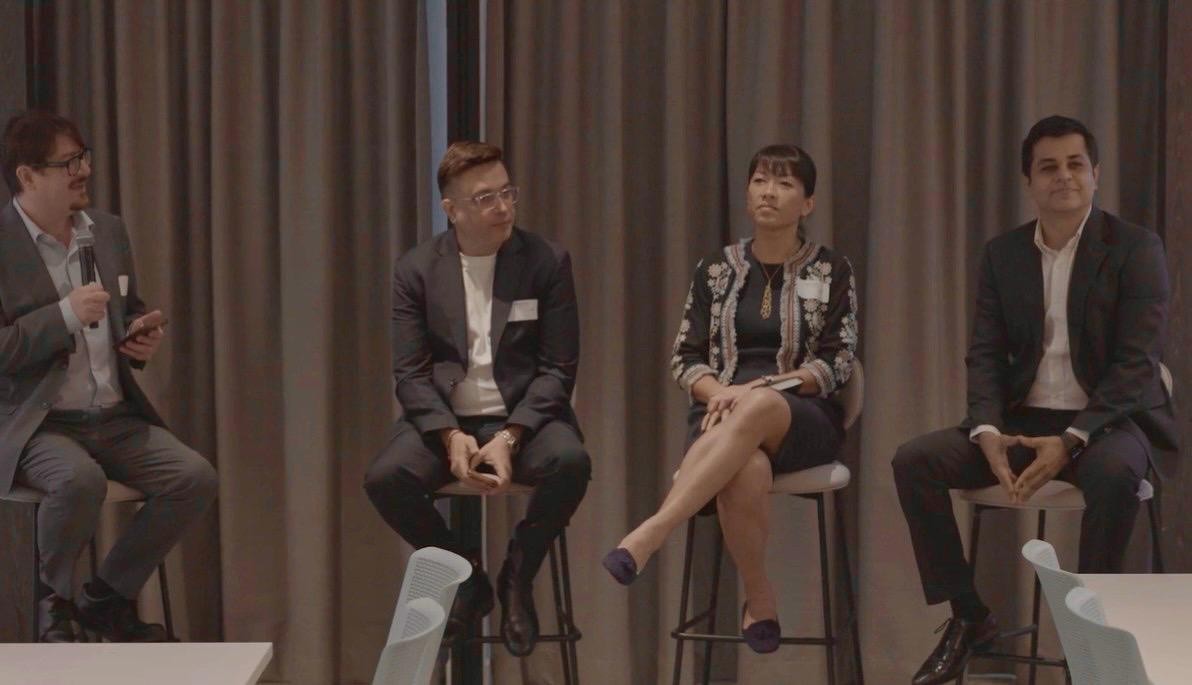
Pictured from left to right: FMI's Jacob Howard, Cvent's Will Kataria, Aviva Investors' Electra Goh and Deutsche Bank's Mohit Gupta.
Building Communities
The first panel of the day explored how financial institutions build communities that last. A live poll revealed the biggest challenge: mobilising stakeholders, especially Sales.
Deutsche Bank’s Mohit Gupta grounded the conversation in a simple truth: clients are drowning in content. AI will only increase the volume. The only way to stand out is to be useful before promotional.
Aviva Investors’ Electra Goh added the institutional lens: sophisticated clients want content that challenges their thinking, not content that agrees with them. Relevance comes from understanding what clients are already discussing.
Cvent’s Himanshu (Will) Kataria introduced the idea of the presence premium - in-person events becoming more valuable in an AI-driven world, because they offer something digital cannot: human truth.
Key Takeaways
Useful content beats promotional content - especially in an AI-saturated world.
Institutional clients want content that challenges their thinking.
Engagement scoring matters more than attendance.
Communities are built through conversations, not campaigns.
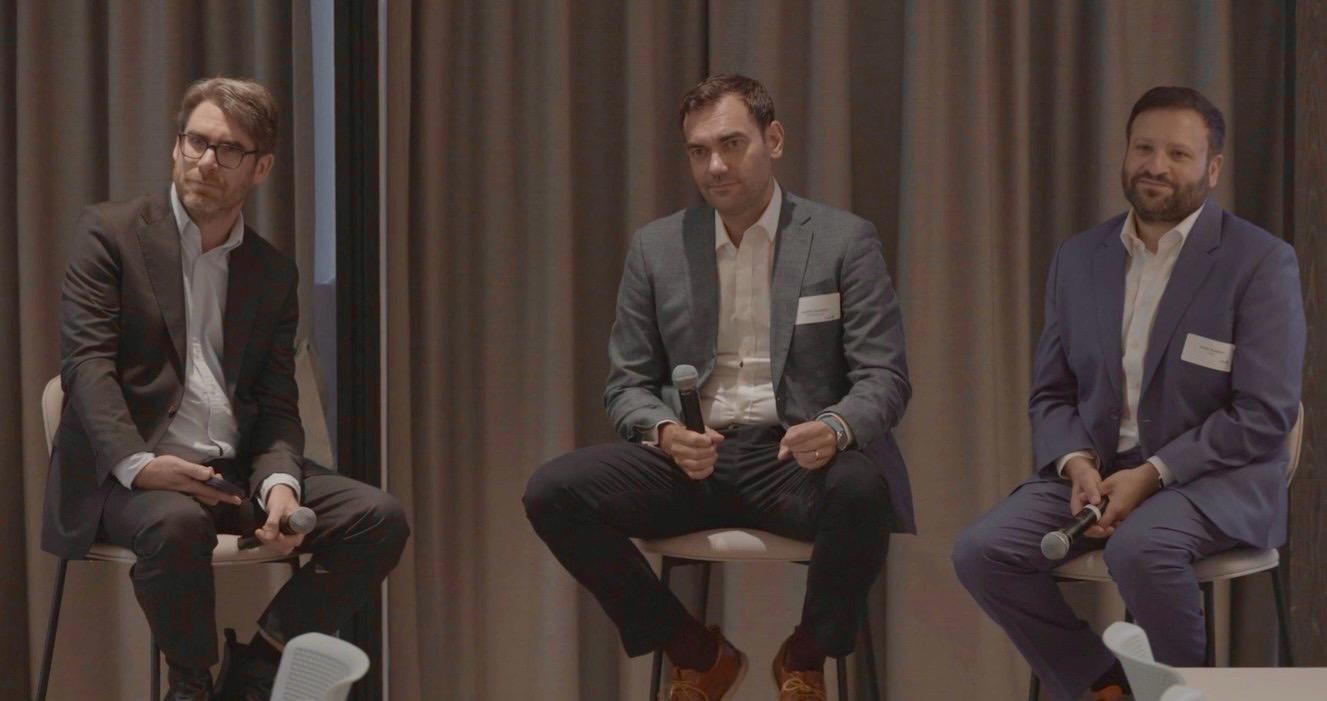
Pictured left to right: WMG's Jamie Credland, Time's Charlie Campbell and CNBC's Justin Solomon.
The Editors’ View
This session zoomed out from marketing mechanics to the geopolitical forces shaping the region. CNBC’s Justin Solomon and TIME’s Charlie Campbell offered a rare, unfiltered look at how global events ripple through APAC in conversation with World Media Group’s Jamie Credland.
Justin reminded us that all roads lead to Washington - tariffs, elections, foreign policy decisions all impact APAC’s supply chains, travel patterns, and business confidence.
Charlie revealed the hidden interdependencies across the region, such as the fact that Taiwan produces 90% of the world’s advanced semiconductors. The conversation shifted to China’s consumer power, the rise of open-source LLMs, and the changing role of journalists in an AI-driven media landscape.
Key Takeaways
US policy decisions ripple through APAC markets.
Taiwan and South Korea sit at the heart of the global AI supply chain.
Chinese consumer brands are reshaping APAC manufacturing.
AI is transforming journalism - both in production and verification.
Executives must address the news, not avoid it.
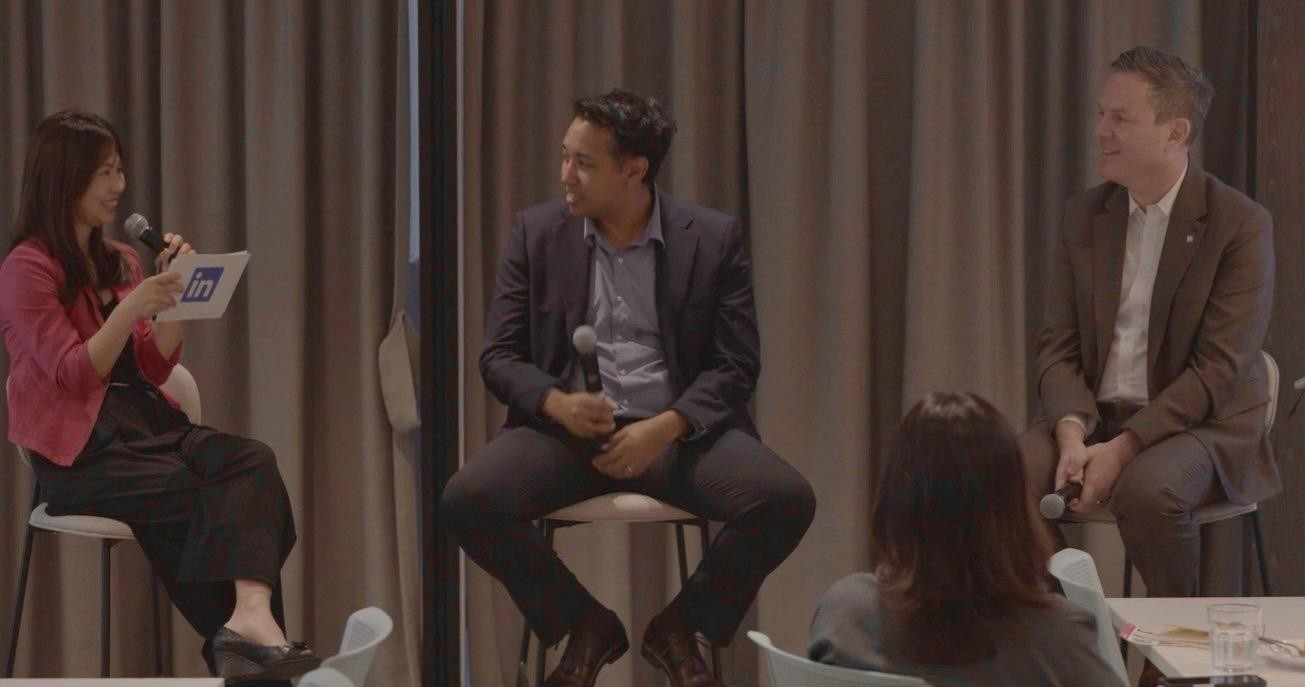
Pictured left to right: LinkedIn's Su-Ren Neo, Airwallex's Jon Stona and Manulife's Julien Fey.
Asia’s Growth Engines
After lunch, the energy lifted again as Airwallex’s Jon Stona and Manulife’s Julien Fey took the stage with LinkedIn’s Su-Ren Neo moderating.
Jon argued that growth in Asia isn’t harder - it’s different. The old playbook of expanding fast and figuring out economics later no longer works. Today’s growth requires deliberate, profitable, scalable expansion.
Julien added that customers are savvier than ever, and advisors want less admin and more prospecting. Productivity and intentionality matter.
The conversation turned to trust, humanity, and the rise of the AI-powered customer. Julien described Manulife’s AI “second brain” for advisors - a tool that answers product and regulatory questions instantly. Jon emphasised that reach is cheap; resonance is the battleground.
Key Takeaways
Growth in Asia requires depth, not breadth.
Trust is a competitive advantage.
Humanity is the new differentiator in B2B marketing.
AI-powered customers are more informed - but still need human safe space.
Workflow redesign beats tool adoption.
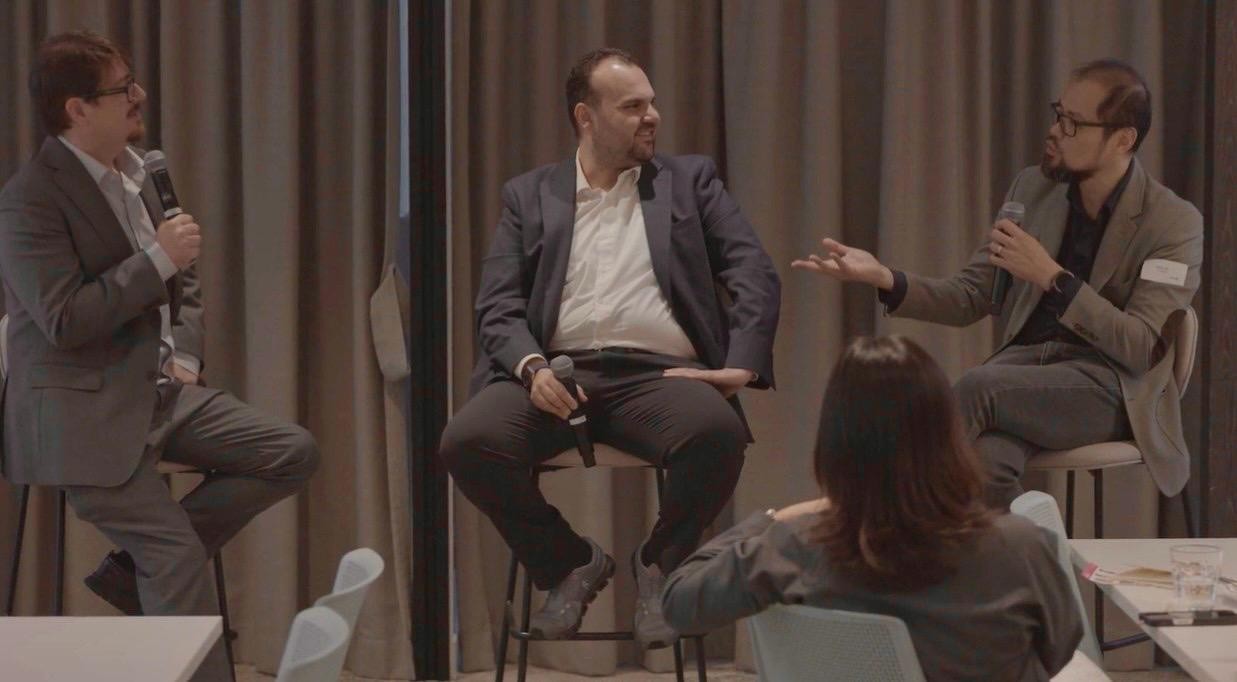
Pictured from left to right: FMI's Jacob Howard, NUS' Dr Samer Elhajjar and Temasek's Chris Teo.
The Attention Economy
This session tackled misinformation, meaningful attention, and trust - three forces reshaping how financial brands communicate.
Temasek’s Chris Teo revealed a new reality: communications teams must now monitor what LLMs say about their organisations. Content must be structured for machines as much as humans. “I’m writing for machines more than people these days,” he said.
National University of Singapore’s Samer Elhajjar, Ph.D. introduced the idea of verification scarcity - the challenge is no longer information scarcity, but the scarcity of verified truth. AI-washing grabs attention but erodes trust. Financial marketers must educate consumers, not manipulate them. He outlined the three layers of trust: brand equity, technological trust, and relational trust.
Key Takeaways
Misinformation is now a machine problem, not a media problem.
Marketers must optimise content for LLMs.
Not all attention is meaningful - trust requires depth.
Overreliance on AI is a risk for consumers.
Emotional value reduces dependence on AI.
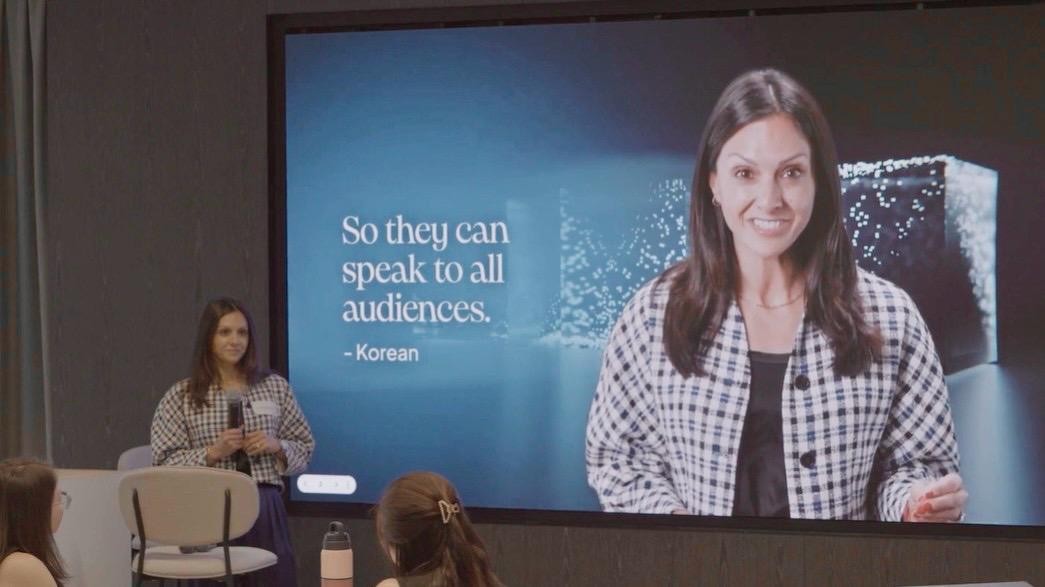
Pictured: Satwant Wishart, CEO, Pandher Wishart Studios
The Rise of the Corporate Newsroom
Pandher Wishart Studios's Satwant Wishart delivered one of the most memorable sessions of the day. She opened with her AI digital twin - speaking multiple languages with perfect lip-sync - raising the question: should we use synthetic expert content?
Her global study revealed a startling insight: only 20% of marketers say their content has more influence than last year, despite AI being embedded everywhere. AI has lowered the cost of content - but raised the cost of originality.
Satwant described the rise of the corporate newsroom - marketing teams operating like editorial engines, producing insight-led content, investing in owned platforms, and elevating internal experts as influencers.
Key Takeaways
AI accelerates content production but erodes differentiation.
Editorial judgment is the new power skill.
Storytelling roles are rising - with salaries 2–3x higher.
Owned platforms are becoming authority engines.
Experts are your differentiators - marketing must extract and frame their perspectives.
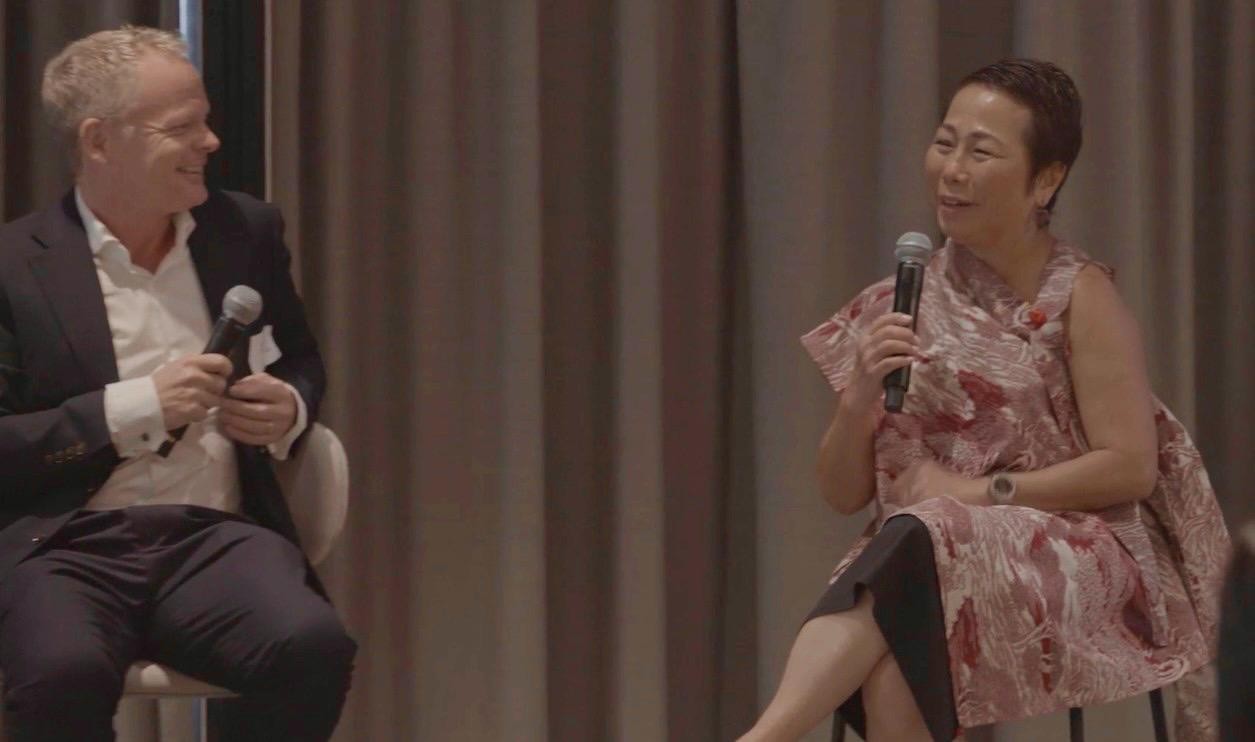
Pictured from left to right: Resonate Global's Chris Wright interviewing Karen Ngui, Head of the DBS Foundation.
Closing Keynote – DBS’ Karen Ngui: On Purpose, Brand Stewardship and Courage
The day closed with a deeply reflective conversation between Resonate Global Advisors LLP’s Chris Wright and Karen Ngui, Head of the DBS Foundation and former Group Marketing head at DBS Bank - one of Asia’s most respected marketing leaders.
Karen revisited her early days at DBS, when the brand needed to stand for something real. Living, Breathing Asia positioned DBS as a bank in, for, and with Asia. Later, Live More, Bank Less signalled a shift to digital banking and customer-centricity.
She described DBS’s transformation as storydoing, not storytelling - doing real things for real people, then telling those stories through Sparks, the bank’s iconic web series that has now surpassed one billion views.
Karen also shared the story of the DBS Foundation - from its $50m origin to its $1bn commitment - and the social entrepreneurs whose journeys began with DBS giving them their first break.
Her advice to marketers was simple and powerful: Swim outside your lane. Speak up. Don’t let perfect be the enemy of good.
Key Takeaways
Brands must stand for something real - not a tagline.
Storydoing beats storytelling.
Sparks became a cultural moment because it was rooted in truth.
Purpose is a strategic asset, not a CSR initiative.
Marketers must be courageous, cross-functional, and human.
Final Thoughts
The APAC Financial Services Marketing Leaders’ Summit 2026 was a day of intelligence, warmth, and ambition. Across AI, trust, storytelling, growth, and purpose, one theme stood out:
- Financial services marketing is entering a new era - one defined by authority, humanity, and intelligent use of technology.
Thank you to all attendees, speakers, and partners, particularly LinkedIn for hosting. And thank you in advance to Pandher Wishart Studios for the upcoming highlights video.
Until next time - keep building, keep connecting, and keep marketing with purpose.