Events
When Everything Accelerates, Judgement Matters Most - 2026 EMEA Summit Highlights
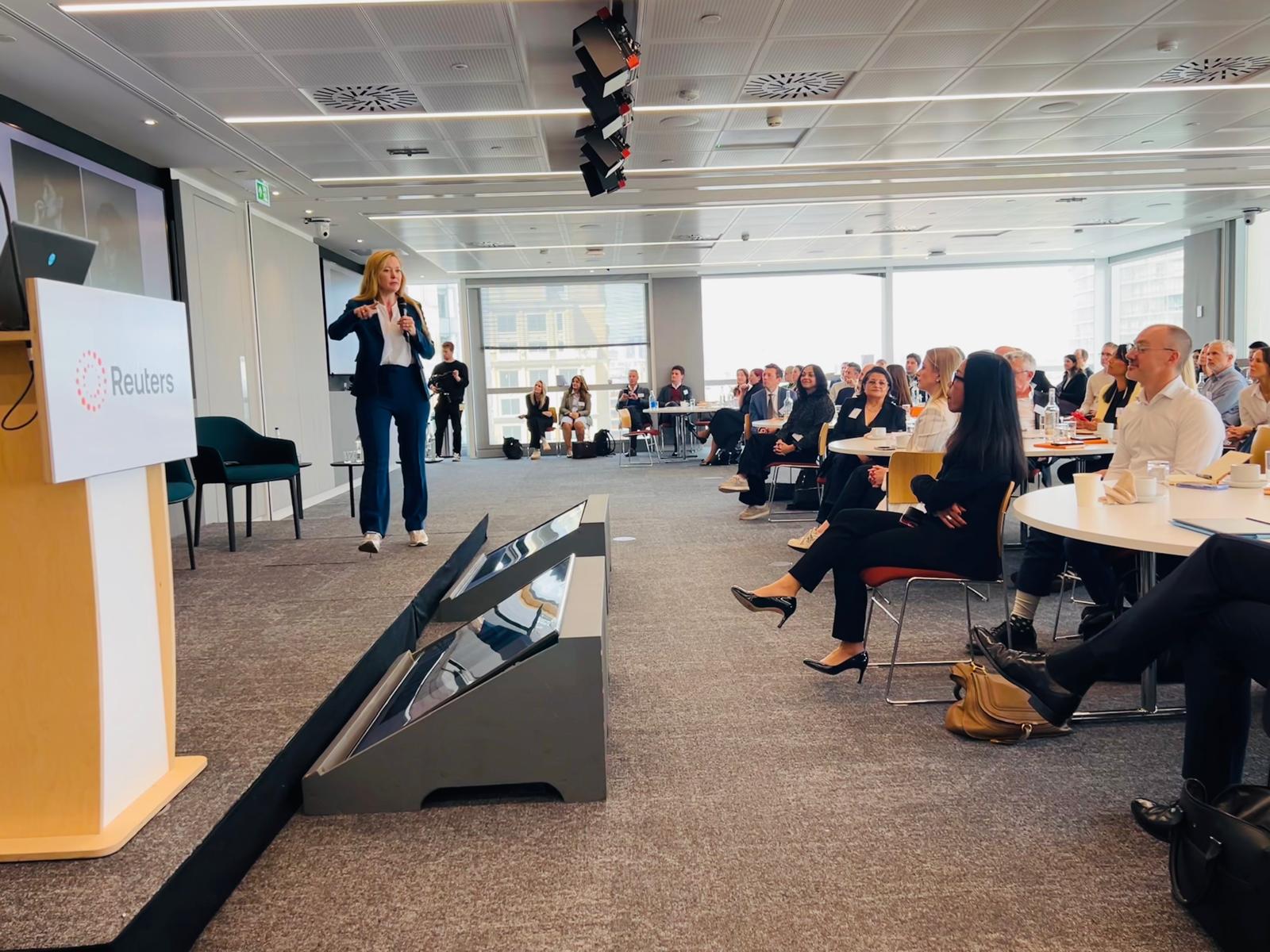
(This article first appeared on LinkedIn here)
On 19 May 2026, CMOs, senior marketers and industry leaders from across Europe’s financial services sector gathered at Thomson Reuters’ London headquarters for the EMEA Financial Services Marketing Leaders’ Summit - a day defined by clarity, candour, and unusually honest conversations about the future of financial services marketing in an AI‑accelerated world.
Supported by Adobe, CIM | The Chartered Institute of Marketing, Cvent, Dianomi, Ei Global B2B Marketing Intelligence, the World Media Group and kindly hosted by Reuters, the Summit brought together leaders from global banks, asset managers, fintechs, media organisations, and academia. What emerged was a clear‑eyed view of how quickly expectations are shifting and how profoundly AI is reshaping the way we work.
Welcome to Reuters
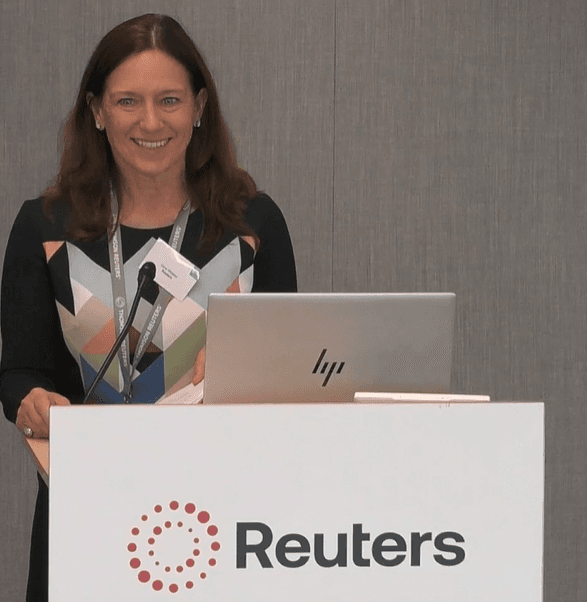
Pictured: Dana Whitaker, Reuters
Dana Whitaker welcomed delegates to Reuters and spoke about the organisation’s role in an era of information overload. In a world shaped by volatility, misinformation, and algorithmic distortion, trusted information is becoming a strategic asset. Her message set the tone: credibility, context, and accuracy matter more than ever.
Keynote: The AI Strategy Shift in Financial Services
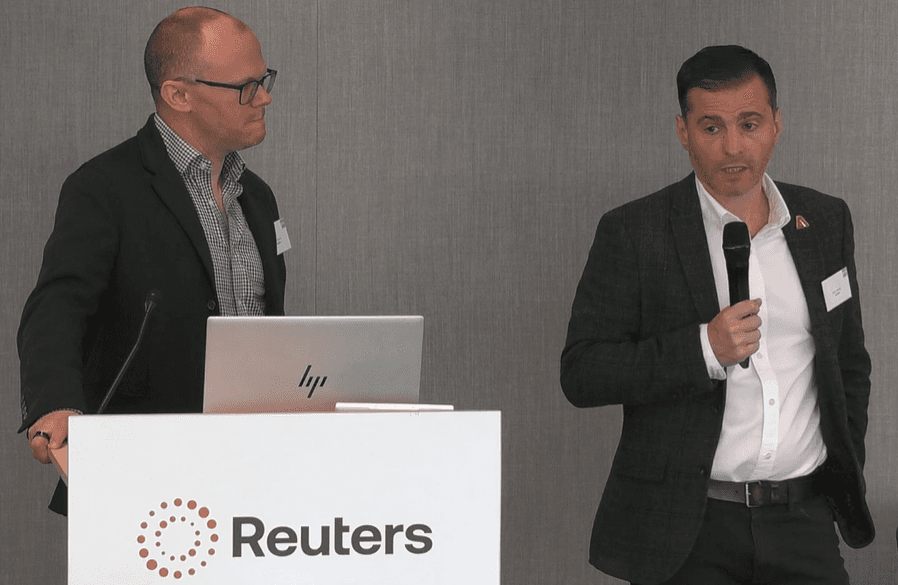
Pictured: Jamie Brighton & Simon Murray, Adobe
Simon Murray & Jamie Brighton opened the day with a grounded, highly practical look at how AI is reshaping customer experience - from generative productivity gains to the rise of agentic journeys. Their message was clear: AI is no longer a tool; it is becoming the operating layer of modern marketing. But execution still fails where data, governance, and alignment are weak.
Key takeaways:
AI accelerates success - and failure.
Agentic experiences will redefine customer journeys.
Trust is the new competitive moat.
Unlocking Human Advantage - Psychology, Talent & Culture
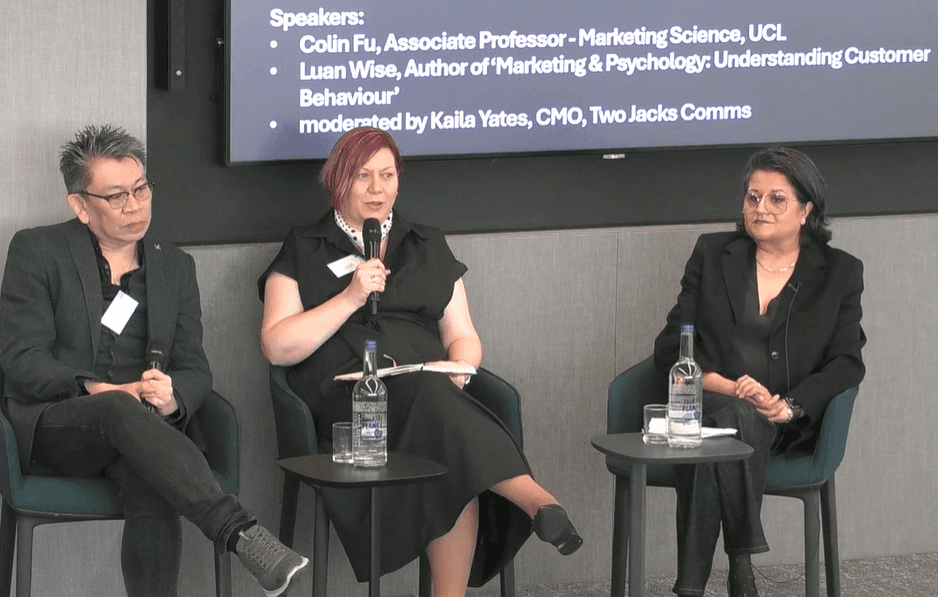
Pictured: Colin Fu (UCL), Luan Wise (Author), Kaila Yates (Two Jacks Comms)
One of the most resonant sessions of the day featured Kaila Yates (FCIM) (Two Jacks Comms), Colin Fu (UCL) and author, Luan Wise. Behavioural science and psychology were given equal stage time to AI - a balance rarely seen at industry events at the moment.
Professor Colin Fu delivered a memorable line: “AI can never replicate your brand, or how people feel about your brand.”
The panel explored how trust, empathy, and critical thinking are becoming differentiators in an AI‑mediated world - and how younger talent must be taught judgement, not just tools.
This landed especially strongly given the shifting buyer landscape: under‑40 B2B buyers now consult twice as many stakeholders, 57% rely on peer recommendations, and 83% prefer to self‑research before speaking to vendors. Human connection and clarity matter more than ever.
The Editors’ View
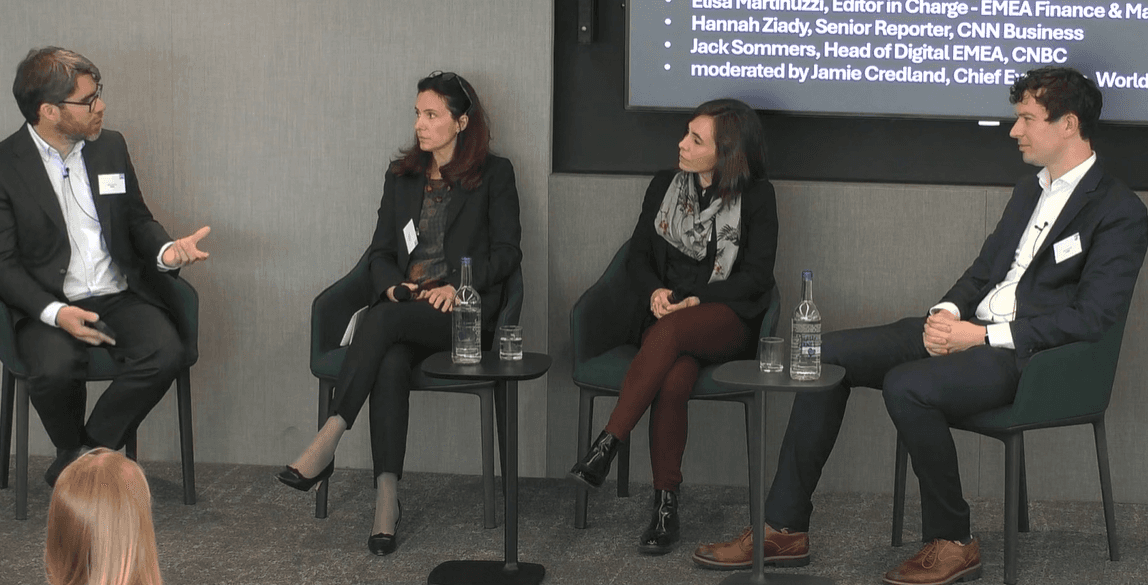
Pictured: Jamie Credland (WMG), Elisa Martinuzzi (Reuters), Hannah Ziady (CNN), Jack Sommers (CNBC)
A panel with three of the world’s most influential newsrooms delivered a brisk, unfiltered tour of the geopolitical and economic forces shaping financial services. They reminded the room that customers don’t live in marketing funnels - they live in a world shaped by elections, inflation, conflict, regulation and shifting sentiment. In that environment, truth and context aren’t just journalistic principles; they’re the basis of credibility for any brand trying to earn attention.
Building Communities: Content, Connection & Long‑Term Engagement
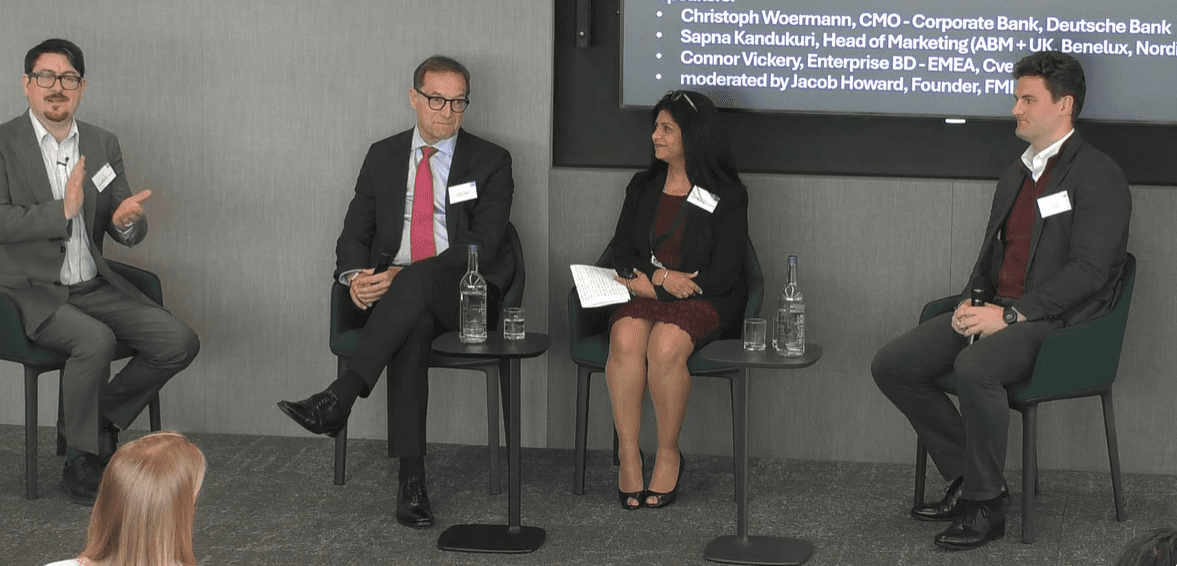
Pictured: Jacob Howard (FMI), Christoph Woermann (Deutsche Bank), Sapna Kandukuri (LSEG), Connor Vickery (Cvent)
Christoph Woermann, FCIM kicked off this fascinating panel with an emphasis on valuing your audience’s time - “know what you want to be known for, and stay focused.” Sapna Kandukuri built on this with a more structural perspective, arguing that communities don’t grow from content alone, but from alignment. She spoke about the role of ABM in creating tightly defined communities, the importance of mobilising sales and internal stakeholders, and the discipline required to keep everyone pointed at the same audience.
Connor Vickery added the activation lens - how communities actually move. He highlighted the role of events, digital touchpoints, and always‑on engagement in turning a defined audience into a living, breathing community. His point was clear: communities aren’t built in a quarter; they’re built through rhythm, participation, and repeated value.
A live poll using the FMI Live app during the session reinforced the challenge. When asked “What’s the biggest barrier to building client communities?”, 47% of the room chose “targeting the right audiences effectively” - far ahead of content, events, or internal mobilisation. It was a revealing moment: community isn’t a content problem; it’s a clarity problem.
Key takeaways:
Communities compound; campaigns decay.
Events and digital touchpoints sustain momentum.
Targeting, not content, is the biggest challenge.
The Rise of Intelligent Marketing Systems
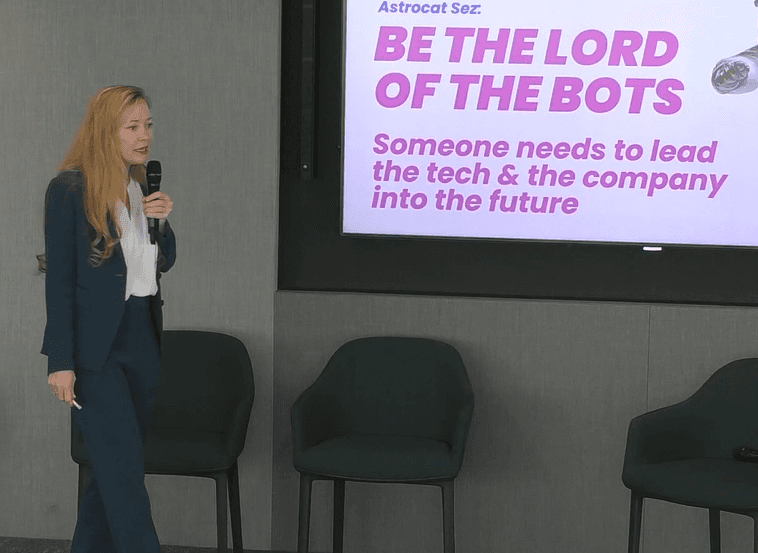
Pictured: Dominique Rose Van‑Winther, Final Upgrade
Dominique Rose Van-Winther's session was one of the day’s most energising moments - fast, sharp, and unapologetically future‑facing. She argued that AI isn’t simply speeding up marketing; it’s rewiring the entire operating model, collapsing timelines that once took months into weeks, and shifting the centre of gravity back toward strategy, insight, and narrative.
Her concept of “The Fear Flip” landed hard: the industry has moved from fearing AI to fearing missing out on what it enables. She showed how global research programmes, content engines, and personalised digital experiences can now be built at a fraction of the time and cost - not to replace teams, but to free them to do the higher‑order work that actually differentiates brands. Her message was clear and provocative: AI won’t replace marketers - but it will expose weak strategy and amplify strong ones.
The Attention Economy: Reaching the Right Clients in a Noisy World
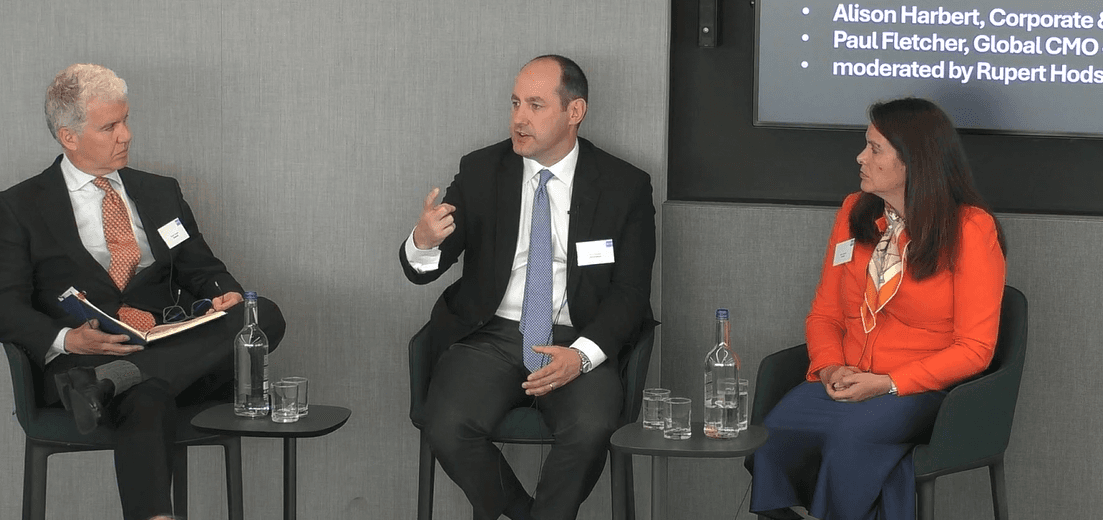
Pictured: Rupert Hodson (Dianomi), Paul Fletcher (Schroders) and Alison Harbert (Lloyds)
Rupert Hodson’s panel brought a welcome dose of realism to the conversation. With premium audiences scattered across platforms, formats, and devices, attention has become the scarcest commodity in financial services. Rupert reframed the challenge not as a targeting problem, but as an attention‑allocation problem: where do senior decision‑makers actually spend time, and what earns their trust?
Alison Harbert and Paul Fletcher built on this, arguing that in a fragmented landscape, brands must show up where trust already exists - not where impressions are cheapest. They emphasised disciplined storytelling, premium environments, and the need to design content that respects the time and intelligence of the audience.
As one attendee reflected afterwards: “AI is changing discovery, but trust still needs to be earned through credible brands and sources.”
Marketing in Action: Trust & Customer Closeness in an AI‑Mediated Journey
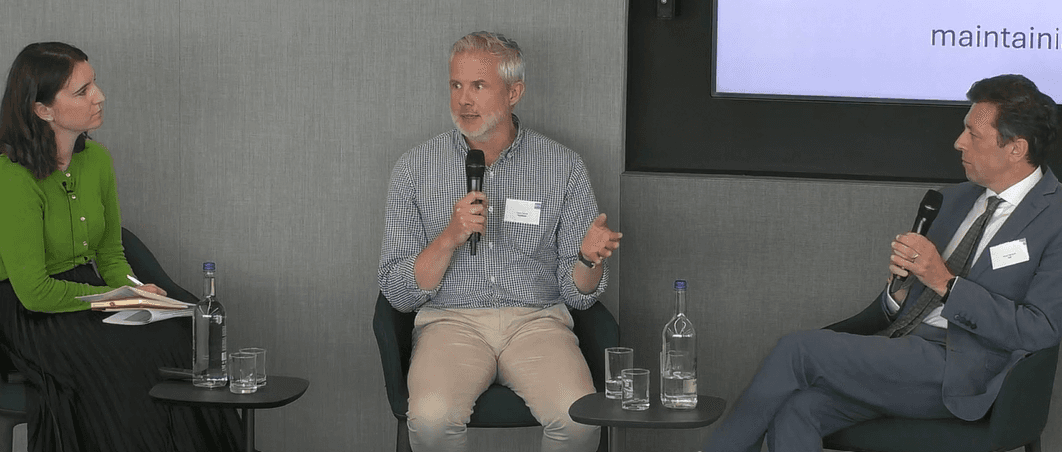
Pictured: Caroline Joyce (EI Advisory), Gavin Horner (NatWest), Oliver Harrison (ex Citi)
This session brought the conversation down from strategy to the lived reality of modern marketing teams. Caroline Joyce framed the challenge: in an AI‑mediated world, brands must codify their narrative and show up consistently across every touchpoint - human and machine. If you don’t define your signals, she argued, the algorithms will do it for you.
Gavin Horner added the data that made the room sit up: trust in LLM responses has jumped from 37% to 61% in a single year. Half of all buyers now start with AI before they ever reach a website or a salesperson. The implication was clear - machines are becoming “customers” in their own right, and brands must be structured so that both humans and LLMs can interpret them accurately.
Oliver Harrison grounded the discussion in the operational reality behind trust. He spoke about the need for customer closeness, not as a slogan but as a discipline: getting teams aligned around real customer needs, closing the gap between insight and execution, and ensuring that brand, product, and sales are telling the same story. His point was simple but powerful: trust isn’t built by marketing alone, it’s built by the organisation behaving consistently over time.
Together, the panel made a compelling case: in an AI‑mediated buyer journey, brand is no longer a set of assets - it’s a system, and it only works when the whole organisation is aligned behind it.
A New Operating Model for Content
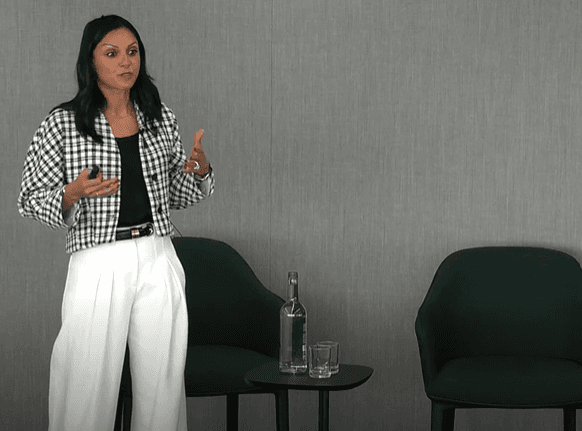
Pictured: Satwant Wishart, Pandher Wishart Studios
Satwant Wishart’s session cut straight to one of the industry’s biggest blind spots: while AI has dramatically increased content production, only 20% of organisations are seeing any uplift in influence or impact. The latest Global Marketing Leaders Content Study made the gap impossible to ignore.
She argued that the issue isn’t tools - it’s the operating model. Most FS teams are still optimised for volume, not value. They produce more, faster, but without the editorial judgement, originality, or point of view required to stand out in a world where every brand now has generative capability.
Closing Keynote: View from the Boardroom
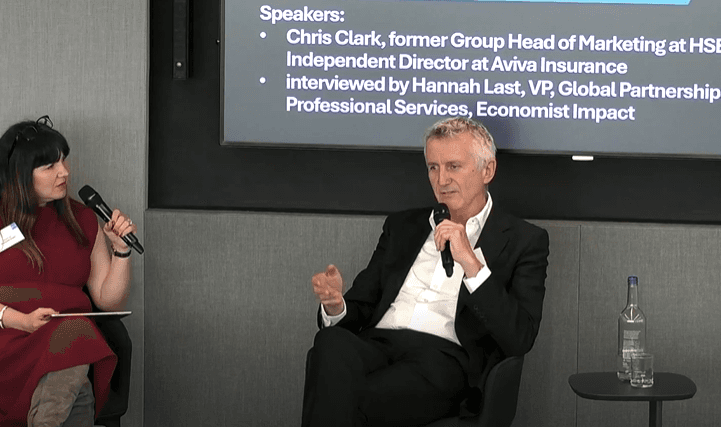
Pictured: Hannah Last (Economist Impact) and Chris Clark, Aviva
Hannah Last’s interview with Chris Clark, former Group Head of Marketing, HSBC and Senior Independent Director, Aviva closed the Summit with the kind of clarity that only comes from decades of global brand leadership. Chris reflected on the cultural intelligence required to steward a global brand, the discipline behind “The World’s Local Bank,” and the shift from traditional marketing to marketing as a driver of organisational behaviour.
He spoke candidly about the responsibility senior marketers carry - not just to shape perception, but to shape how organisations act. His “three‑thirds rule” - one third of what you do is genuinely useful, one third could become useful with changes, and one third nobody would miss if you stopped doing it - landed as one of the day’s most practical and disarming takeaways.
His closing message was simple and powerful: have the bravery to do the tough and important things - because ideas alone aren’t enough. Every spark needs a flame.
Exciting Times for FS Marketers
Across the day, one message kept resurfacing: AI may be transforming the mechanics of marketing, but the foundations of competitive advantage remain stubbornly human - trust, coherence, narrative discipline, and the courage to act with intent. And while AI was mentioned time and again, there was a growing recognition that soon even calling it out will feel redundant. It will be as useful as saying “I used a computer.” What matters is the task, the judgement behind it, and the context in which it’s applied.
The brands that will thrive are the ones that move with culture and technology, not after them; that codify their brand system so both humans and machines can understand it; that show up consistently for the audiences that matter. They’ll be the organisations that invest in originality and point of view, that treat marketing as a connected system rather than a set of outputs, and that protect the human touch even as automation scales around them.
It was a day defined by candour, curiosity, laughter and ambition - and a reminder that while AI accelerates everything, it’s still human insight that sets the direction of travel.
Finally a big thanks again to all involved - to our largest ever Summit and an amazing buzzing room full of financial marketing insights!
See you next time!
(send me a message if you'd like the slides from the day)